The Most Common Amphibian-Keeping Mistakes, Ranked
🔍 Fact check
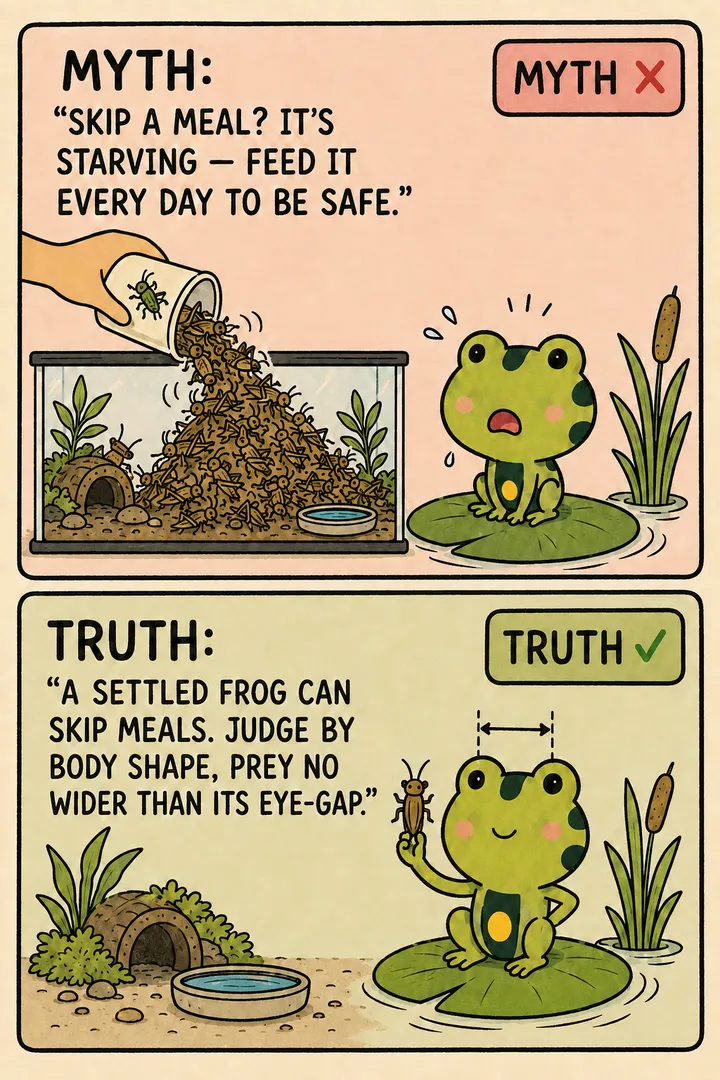
“If your amphibian skips a meal it is starving — feed it every day to be safe.” — A common beginner worry
Verdict: Mostly False
Feeding errors are the single biggest source of keeper questions in our data — and overfeeding, not underfeeding, is the usual problem. A settled, correctly-kept amphibian can safely skip meals; the right approach is appropriately-sized prey (no wider than its head) judged by body condition, not a rigid daily schedule.
The evidence:
- Feeding is the #1 topic keepers actually ask about (~36%). In Bognook's analysis of 377 real care questions mined from 5,600+ keeper posts, feeding — overfeeding, wrong feeder size, and panic over a normal fast — was the largest cluster (full method and data).
- A settled amphibian can skip meals. Amphibians are ectotherms with low, temperature-dependent metabolisms, so a cool, settled animal in good body condition does not need daily food, and a short fast is normal.
- Judge by body condition, not the calendar. The husbandry fix is prey no wider than the animal's head, fed to the animal's condition — overfeeding (obesity, fouled water) is the more common real harm.
Most “beginner mistakes” lists are guesswork. So we did it differently: we read what amphibian keepers actually ask — 5,600+ posts and comments, filtered to 377 real care questions — and ranked the mistakes by how often the problem behind them comes up. Here’s the honest list, most-common first, each with the fix and the free tool to catch it.
The 30-second version: the mistakes are the everyday basics — feeding, breeding/morphing confusion, water quality, and misreading sick-vs-normal — plus two quieter killers for aquatics: warm water and an uncycled tank. Almost every one comes from a keeper who cares and is anxious about getting it wrong. No shame here — just the fix.
→ Full method and data: What Amphibian Keepers Actually Ask (377 care questions, ranked).
1. Feeding it wrong — the #1 topic (~36% of questions)
The single biggest source of questions, and the most common mistake: overfeeding, wrong feeder size (food no wider than the animal’s head), offering the wrong food, and panicking over a normal fast (a settled, cool amphibian can skip meals).
The fix: feed appropriately-sized food and judge by body condition, not a rigid schedule. → What to feed your amphibian.
2. Warm water & an uncycled tank — the quiet aquatic killers
Fewer questions than feeding, but these mistakes can kill aquatic amphibians quickly. Warm water is dangerous for axolotls — they need cold water (~16–18°C / 60–64°F), no heater, and cooling in summer. An uncycled tank means ammonia burns: the tank must be cycled before the animal.
The fix: cold, fully-cycled, dechlorinated water — test it. → Do I need to cycle my tank? · read your parameters with the water interpreter.
3. Breeding & morphing confusion — the #2 topic (~23%)
Mostly panic, not intent: “is my axolotl morphing?” (usually not — and forcing metamorphosis is dangerous), surprise eggs from a lone female, or accidental spawning after a water change.
The fix: know what’s normal for your species before you intervene. → Found eggs — should I breed?.
4. Misreading sick-vs-normal — panic or complacency (~14%, health + behaviour)
Health (“is my animal sick?”) and behaviour (“is this normal?”) together are a big cluster split between two opposite errors: panicking over normal behaviour, and missing genuine red flags (fungus/cotton-wool growths, floating or sinking, gulping at the surface, sudden appetite loss, a curled or discoloured gill).
The fix: learn the real red flags and treat the rest as watch, don’t panic. → Is my amphibian sick? · is this behaviour normal? · the symptom checker.
5. Over-handling (and needless toxicity fear) — (~9%)
The mistake runs both ways: over-handling — amphibian skin absorbs oils, soaps and toxins, so frequent handling stresses and can harm them — and the opposite, needless fear that all amphibians are dangerously toxic.
The fix: look-don’t-touch by default; handle only when necessary, with clean, wet hands and a wash after. → Can you handle amphibians — are they poisonous?.
6. Wrong or risky substrate (~5%)
The aquatic classic: gravel in an axolotl tank (a genuine impaction risk — they can swallow it), or a substrate that fouls the water.
The fix: bare-bottom or fine sand for axolotls; match the substrate to the species. → What substrate is safe? (impaction).
7. A tank that’s too small — the “setup second” trap
Buying the animal first and the habitat second, then discovering the tank is too small — which for aquatics means unstable water and a struggling filter.
The fix: build the correctly-sized, cycled setup before the animal. → What size tank does my amphibian need?.
8. Buying on impulse (~6%)
The mistake behind several others: impulse-buying on outdated pet-store advice, or an unhealthy animal, without a cycled setup ready.
The fix: get the setup right first, and buy from someone who can answer care questions. → the complete buying guide.
The pattern underneath all of them
Notice what’s not on this list: nothing exotic. The most common mistakes are the everyday basics — feeding, water, reading the animal — and nearly every question behind them comes from someone who cares and is worried about getting it wrong. That’s the opposite of carelessness, and it’s exactly who honest, judgment-free care information is for.
💚 Made one of these? So has almost every good keeper. The measure of a keeper isn’t never making a mistake — it’s fixing it once you know. If your question isn’t answered here, ask us.
🧨 Species-specific myths, busted: many of these mistakes start as a myth. See axolotl myths that can hurt your axolotl.
Written by The Bognook Team. This is a demand-ranked guide built from real keeper questions — the mistakes and fixes are checked against our care guides. For an amphibian showing a red-flag sign above, see an exotics vet.
Common questions
What is the most common amphibian-keeping mistake?
Feeding errors — by a wide margin. In our analysis of 377 real care questions, feeding was the single biggest topic (about 36%): overfeeding, wrong feeder size, offering the wrong food, and panicking over a normal fast. The fix is to feed appropriately sized food for the animal's size and age, and to judge by body condition rather than a fixed schedule.
What do beginners get most wrong about axolotls specifically?
Two husbandry mistakes can kill an axolotl quickly: warm water (axolotls need cold water, ~16–18°C/60–64°F — no heater, and a chiller or fan in summer) and an uncycled tank (ammonia burns). Neither is the most-asked topic by count, but because they can be deadly, they top the 'get this right first' list even though feeding generates more questions.
Why do so many amphibian questions involve breeding or morphing?
Breeding, eggs and morphing are about 23% of questions — the second-biggest cluster — mostly confusion rather than intent: 'is my axolotl morphing?' (usually not, and forcing it is dangerous), surprise eggs from a lone female, or accidental spawning. The fix is knowing what's normal for your species before you panic or intervene.
Is it a mistake to handle amphibians?
Often, yes — handling and safety is about 9% of questions, and the mistake runs both ways: over-handling (amphibian skin absorbs oils, soaps and toxins, so frequent handling stresses and can harm them) and needless fear of toxicity (most pet amphibians are safe with clean, wet hands and a good hand-wash after). Look-don't-touch is the default; handle only when necessary, with clean wet hands.
Are these mistakes ranked by how serious they are?
No — they're ranked by how often the underlying topic appears in real keeper questions (our mined demand data), which is a good proxy for how commonly beginners hit them. Some rarer mistakes (warm water, an uncycled tank for aquatics) are more lethal, so read the red-flag notes too. The point is: these are the things keepers genuinely struggle with, in order.
📚 Keep reading
- What Amphibian Keepers Actually Ask: 1,165 Real Questions, Analysed
- The Complete Amphibian Buying Guide: Costs & What to Buy
- Best Beginner Amphibian: How to Choose (Axolotl, Toad, Tree Frog, Dart Frog & Newt)
- Amphibian vs Reptile Keepers: What 765 Questions Reveal
- Can You Handle Amphibians — and Which Ones Are Poisonous?
- Do I Need to Cycle My Aquatic Amphibian's Tank? (Axolotls, Dwarf Frogs, Newts)

Join the Bognook burrow
Cozy amphibian care tips, aesthetic freebies, and the occasional frog fact — straight to your inbox. No spam, just good bog vibes.
Free amphibian care cheat-sheet when you join. No spam — pinky-promise. Unsubscribe anytime. See how we handle your data in our privacy notice.