← All species · Frogs

Pacman Frog

Ceratophrys ornata · also called Ornate horned frog, Cranwell’s horned frog (C. cranwelli)

Beginner Family Ceratophryidae

A "mouth with feet" — a low-drama blob that sits, burrows and eats.

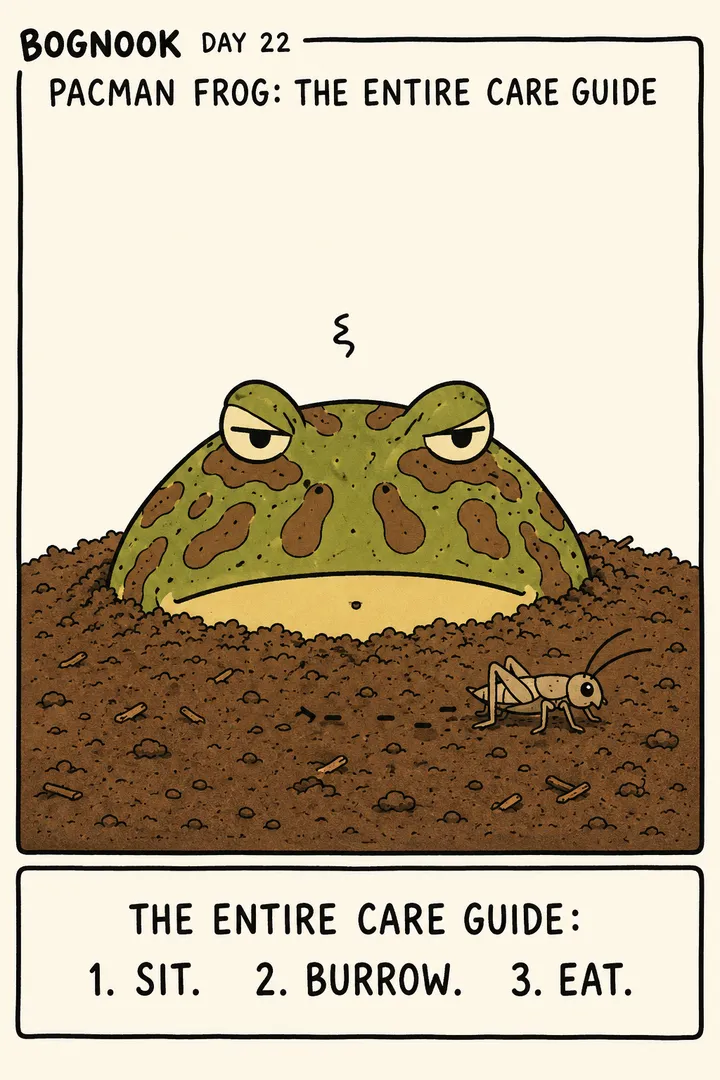
A round Pacman frog whose 'entire care guide' is three steps: sit, burrow, eat. The point: Pacman frogs are sedentary ambush predators that spend most of their life buried, waiting for food.
The Pacman frog's whole personality: sit, burrow, eat. They are low-activity ambush predators that stay buried most of the time — calm to keep, but not a frog that does much.

✅ We have a full, fact-checked care sheet for the Pacman Frog.

Open the Pacman Frog care sheet →

📋 At a glance

Tank
Terrestrial 10–20 gal (1 frog only — they are cannibals)
Temp
78–82°F day, cooler at night, never above ~85°F
Humidity
60–80% — deep moist coco fibre to burrow in
Food
Gut-loaded, calcium-dusted insects/worms; adults once or twice a week
Lifespan
6–10+ years

✅ One of the easiest amphibians to keep well — it mostly sits, burrows, and eats.

🛒 Before you buy

  • Several inches of moist coco fibre (NEVER gravel — swallowed, it can cause a fatal gut blockage)
  • A shallow dish of dechlorinated water, changed often
  • A thermometer + hygrometer and a secure, ventilated lid
  • Feeding tongs — it is an ambush predator that will bite

A healthy one: Rounded (not puffy) body · clear full eyes · smooth skin · a strong feeding response (even if mostly buried).

🚨 See a vet / act now if…

  • Swelling like a balloon all over (possible dropsy)
  • A bloated belly with no droppings (possible impaction)
  • A reddened belly or legs, or a soft jaw / bendy limbs
  • Buried for weeks with weight loss

⛔ Never

  • Gravel or loose swallowable substrate
  • Overfeeding (obesity and liver problems)
  • Handling (it bites)

Common pacman frog questions

How hard are Pacman Frogs to keep — are they good for beginners?

Beginner. Genuinely low-effort once the substrate and feeding are right.

What do Pacman Frogs eat?

Gut-loaded, calcium-dusted insects/worms; adults once or twice a week

What size tank do Pacman Frogs need?

Terrestrial 10–20 gal (1 frog only — they are cannibals)

What temperature do Pacman Frogs need?

78–82°F day, cooler at night, never above ~85°F

What humidity do Pacman Frogs need?

60–80% — deep moist coco fibre to burrow in

How long do Pacman Frogs live?

6–10+ years

What are the signs Pacman Frogs are sick?

See an exotics vet if you notice: Swelling like a balloon all over (possible dropsy); A bloated belly with no droppings (possible impaction); A reddened belly or legs, or a soft jaw / bendy limbs; Buried for weeks with weight loss.

🧠 Myths, kindly busted

Common myths about the pacman frog and its relatives, gently corrected — each one checked against a named source, never a pet-shop rumour.

“Feed a pacman frog as much as it will eat.”False

Overfeeding is the main cause of obesity in amphibians, which will keep eating as long as prey is there, and pacman frogs are prone to it. Vet-written care sheets feed adults just once or twice a week. — Merck Veterinary Manual · PetMD (Maria Zayas, DVM) · Tree of Life Exotic Pet Medical Center

“Gravel is a fine substrate for a pacman frog.”False

Pacman frogs lunge at prey and can swallow substrate with it, and PetMD warns that gravel and rocks can cause a fatal gut obstruction if eaten. Use deep, damp coco fibre or moss, and feed with tongs. — PetMD (Maria Zayas, DVM) · AZA Amphibian Husbandry Resource Guide

“A pacman frog and an African bullfrog are basically the same frog.”Mostly false

They share a burrow-and-ambush lifestyle, but not the scale: male African bullfrogs reach about 6–10 in (male pacmans about 3–4 in), and bullfrogs generally live 15–25 years, with one documented at 45. — Chicago Exotics Animal Hospital · PetMD (Maria Zayas, DVM) · AmphibiaWeb

“Pacman frogs are active pets that need a big, elaborate setup.”

They are sit-and-wait ambush hunters, not built for chasing prey — they bury themselves and pounce on whatever wanders by, so they spend most of their lives still and buried. A modest, deep-substrate home suits them far better than a large busy enclosure. — American Museum of Natural History

“You can handle a pacman frog like a typical pet.”

Amphibians should be handled as little as possible — their absorbent skin picks up whatever is on your hands, and some release skin toxins. Pacman frogs also have big jaws and will lunge and bite, so they are a look-don't-handle pet. — Merck Veterinary Manual

“A pacman frog can safely eat anything and live with tankmates.”

They are voracious ambush feeders that pounce on almost any small animal that fits in their mouth, and horned frogs will even eat other frogs. That is exactly why they live alone and are offered appropriate, sized prey. — American Museum of Natural History

🐸 Did you know? — Pacman Frog fun facts

Little true delights about the pacman frog — each one checked against a named source, no old-wives' trivia.

More amphibian fun facts →

Free tools for the pacman frog

Calm, honest help — each one knows when to say "see a vet."

📚 More frogs guides

🎓 Ready to go deeper?

Past the basics — genetics & morphs, responsible breeding, tankmates, and advanced setups. Same plain voice, no ceiling:

Get the free Pacman Frog Starter Kit

A one-page setup-criteria checklist and a first-30-days plan for your first pacman frog — what to get, what makes each thing matter, and the honest bits the pet shop skips. Join the burrow and we’ll send it over. Free sheets and tools always stay open, no gatekeeping.

Free amphibian care cheat-sheet when you join. No spam — pinky-promise. Unsubscribe anytime. See how we handle your data in our privacy notice.