What to Feed a Pacman Frog or Bullfrog (Beyond Crickets)
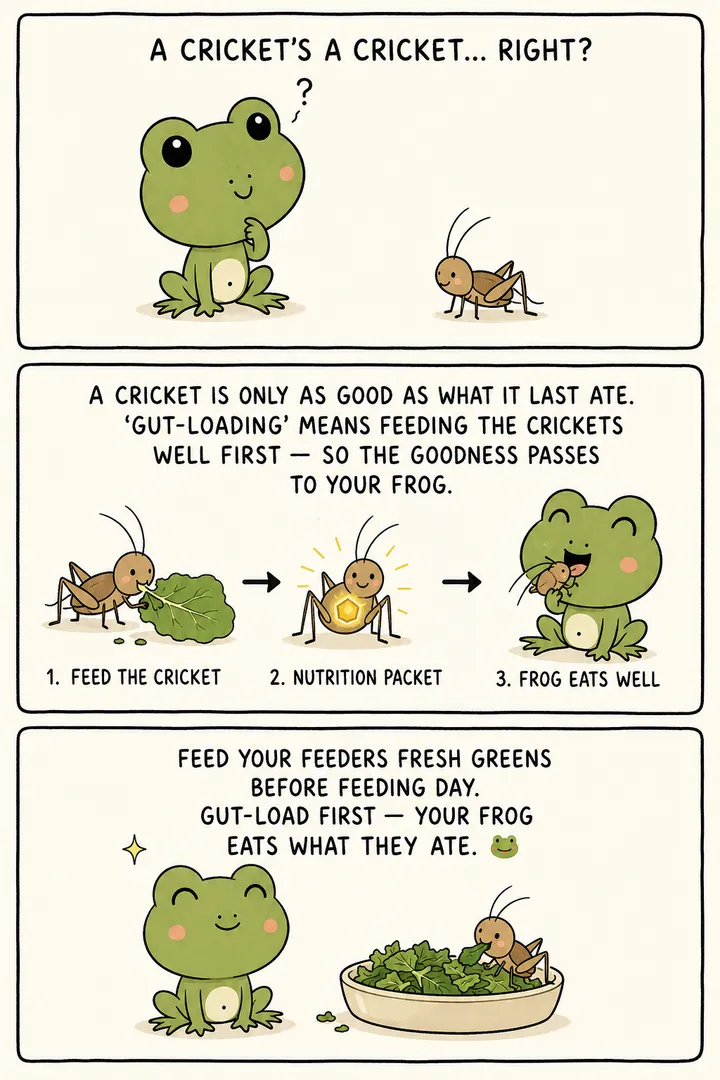
“The crickets keep dying” is a familiar Pacman-frog complaint — and the answer is happily simple: you don’t have to keep buying crickets. Pacman frogs and their giant cousins, African bullfrogs, are enthusiastic eaters that do brilliantly on a varied menu of feeders that are hardier, cleaner, and better for them. Here’s the whole thing.
🐸 Want the feeding schedule on one screen? The free Simple Setup & Feeding checklist gives you the exact amounts and frequency for a Pacman frog or African bullfrog.
First, the two rules that matter most
Before the menu, the two things that keep a frog healthy, not just fed:
- Gut-load and dust every feeder. Feed your insects something nutritious for a day or two, then dust them with calcium/D3 at most feedings (plus a multivitamin regularly). This prevents metabolic bone disease — soft jaw, bendy limbs — and it’s not optional.
- Size it right. Prey should be no wider than the frog’s head. Oversized prey is dangerous — it can rupture the gut of a frog that manages to swallow it.
Get those right and almost anything on the list below works.
The best staple feeders (better than crickets)
- Dubia roaches — the top staple. Hardy, quiet, odourless, nutritious, and they don’t die off or smell the way crickets do. If one feeder replaces crickets in your life, make it this.
- Earthworms / nightcrawlers — excellent, nutritious, and cheap. Many frogs love them, and they’re a superb staple for both species.
- Hornworms — soft, hydrating, and a good change of pace (fast-growing, so buy small).
- Black soldier fly larvae (calci-worms / Phoenix worms) — naturally high in calcium, a great rotation feeder.
- Silkworms — soft, nutritious, well-loved; a premium staple if you can get them.
Rotate a few of these rather than relying on one. Variety covers nutritional gaps and keeps a greedy frog interested.
Treats — occasional only
- Waxworms and superworms are fatty. Fine as an occasional treat, not a staple — too many lead to obesity.
- Skip the daily buffet of anything rich.
Rodents: the obesity trap
This is where African bullfrog keepers especially get caught. A pinkie or fuzzy mouse is fatty and easy to overuse, and frequent rodents can lead to obesity and liver problems — a serious, common problem in pixies.
- Offer rodents occasionally at most — roughly once every 2–3 weeks, for adults only.
- Build the everyday diet around insects and worms, not mice.
- A pixie fed rodents twice a week gets fat, fast. Don’t.
How often to feed
- Juveniles (both species): roughly daily as they grow.
- Adult Pacman frog: once or twice a week.
- Adult African bullfrog: every 3–4 days.
Both frogs will always act starving — that begging face is not data. Feed to a schedule, because for these species, overfeeding is more dangerous than underfeeding.
What NOT to feed
- Wild-caught insects — they may carry pesticides or parasites. Stick to captive-bred feeders.
- Fireflies / lightning bugs — genuinely toxic and can kill a frog. Never.
- Oversized prey — wider than the frog’s head → it can injure or rupture the gut.
- A rodent-heavy diet — obesity and liver problems.
💚 Feed a varied menu of gut-loaded, dusted insects and worms, keep rodents rare, and size everything sensibly — do that and your frog gets everything it needs without the cricket graveyard on your shelf.
Go deeper: What do I feed my amphibian? (all species, feeder sizes) · the Pacman frog care guide · the African bullfrog care guide · the Simple Setup & Feeding checklist.
Sources & further reading
This guide was written and fact-checked against these authorities. It’s kind, general guidance — not a substitute for an exotics vet:
- Josh’s Frogs — Pac-Man frog care sheet & Josh’s Frogs — Pixie frog care sheet — feeder options for Ceratophrys and Pyxicephalus, and dusting a Pac-Man frog’s food with a vitamin/mineral supplement.
- Chicago Exotics Animal Hospital — Pixie Frog Care & Reptiles Magazine — bullfrogs are prone to obesity, especially when fed large amounts of rodents; rodents only every 2–3 weeks.
- Merck Veterinary Manual — noninfectious disorders of amphibians — metabolic bone disease and obesity.
- AZA Amphibian Husbandry Resource Guide — aggressive feeders such as horned frogs can swallow gravel by accident, causing a digestive-tract impaction; prey that is too large can rupture the digestive tract of an amphibian that swallows it.
- PetMD — Pacman frog care sheet — adult Pacman frogs fed one to two times a week.
- Association of Reptilian & Amphibian Veterinarians (ARAV) — a find-an-exotics-vet directory.
Written and fact-checked by The Bognook Team against veterinarian-authored sources — if your frog won’’t eat for weeks or looks unwell, see an exotics vet.
Common questions
What can I feed my Pacman frog besides crickets?
Plenty. Dubia roaches make an excellent staple — they are hardy, quiet, do not smell, and do not die off like crickets. Other good feeders are earthworms and nightcrawlers (very nutritious), hornworms, black soldier fly larvae (calci-worms), and silkworms. Keep fatty feeders like waxworms and superworms as occasional treats. Variety plus gut-loading and calcium dusting is what keeps a frog healthy — no single feeder should be the whole diet.
Can Pacman frogs and African bullfrogs eat mice?
Occasionally, for adults only — never as a staple. A pinkie or fuzzy mouse is fatty and easy to overuse, and frequent rodents can lead to obesity and liver problems, especially in African bullfrogs. If you offer them at all, keep it to roughly once every 2 to 3 weeks at most, and build the everyday diet around insects and worms instead.
How often should I feed a Pacman frog or African bullfrog?
It depends on age. Juveniles of both species eat roughly daily as they grow. Adult Pacman frogs eat once or twice a week; adult African bullfrogs every 3 to 4 days. Both have bottomless appetites and will always act starving, so feed to a schedule rather than to their begging — overfeeding is more dangerous than underfeeding for these frogs.
Do I need to gut-load and dust feeders?
Yes — this is not optional. Gut-load feeder insects (feed them nutritious food for a day or two before offering them) and dust them with a calcium/D3 supplement at most feedings, plus a multivitamin regularly. Without it, frogs develop metabolic bone disease (soft jaw, bendy limbs) from calcium deficiency. Feeders straight from the tub are nutritionally poor until you gut-load and dust them.
What should I never feed a Pacman frog or bullfrog?
Avoid wild-caught insects (they may carry pesticides or parasites), fireflies/lightning bugs (genuinely toxic and can kill a frog), and any prey wider than the frog's head (oversized prey can rupture the gut). Go easy on fatty feeders like waxworms, and do not make rodents a regular meal. When in doubt, feed appropriately sized, gut-loaded, dusted insects.

Join the Bognook burrow
Cozy amphibian care tips, aesthetic freebies, and the occasional frog fact — straight to your inbox. No spam, just good bog vibes.
Free amphibian care cheat-sheet when you join. No spam — pinky-promise. Unsubscribe anytime. See how we handle your data in our privacy notice.