Pacman & African Bullfrog Questions, Answered (Beginner FAQ)
Pacman frogs and their giant cousins, African bullfrogs (Pixie frogs), are two of the most popular “blob” frogs in the hobby — and they raise a lot of the same beginner questions. Here are quick, honest answers to the ones that come up most.
🐸 Setting one up? The free Simple Setup & Feeding checklist gives you the exact values for either species. And the full guides go deeper: Pacman frog care · African bullfrog care.
The basics
Are they good beginner pets? Yes — both are among the easiest amphibians to keep well. They’re low-effort, sit-and-wait animals that spend most of their time buried. The catch is that they’re for watching, not handling, and they’re long-lived commitments.
Do they really just… sit there? Mostly, yes. They’re ambush predators — a “pet rock with an appetite.” If you want an active, roaming pet, these aren’t it; if you find a chunky, deadpan blob charming, you’ll love them.
Handling & the bite
Can I hold my frog? Best not to. Both will bite, and their skin absorbs whatever’s on your hands. The African bullfrog’s bite is genuinely powerful (tooth-like jaw ridges) — always use long tongs for feeding and moving it, never fingers. Move a Pacman frog by coaxing it into a container with clean, wet hands.
Will it hurt me? A Pacman frog bite is startling more than dangerous. A full-grown bullfrog bite genuinely hurts. Respect the mouth on both.
Feeding
How often do I feed? Juveniles roughly daily; adult Pacman frogs once or twice a week, adult bullfrogs every 3–4 days. Both will always act starving — feed to a schedule, not to the begging.
What do they eat? Gut-loaded, calcium-dusted insects and worms (crickets, dubia roaches, earthworms). Rodents only occasionally — frequent mice cause obesity, especially in bullfrogs. Full menu: what to feed a Pacman frog or bullfrog.
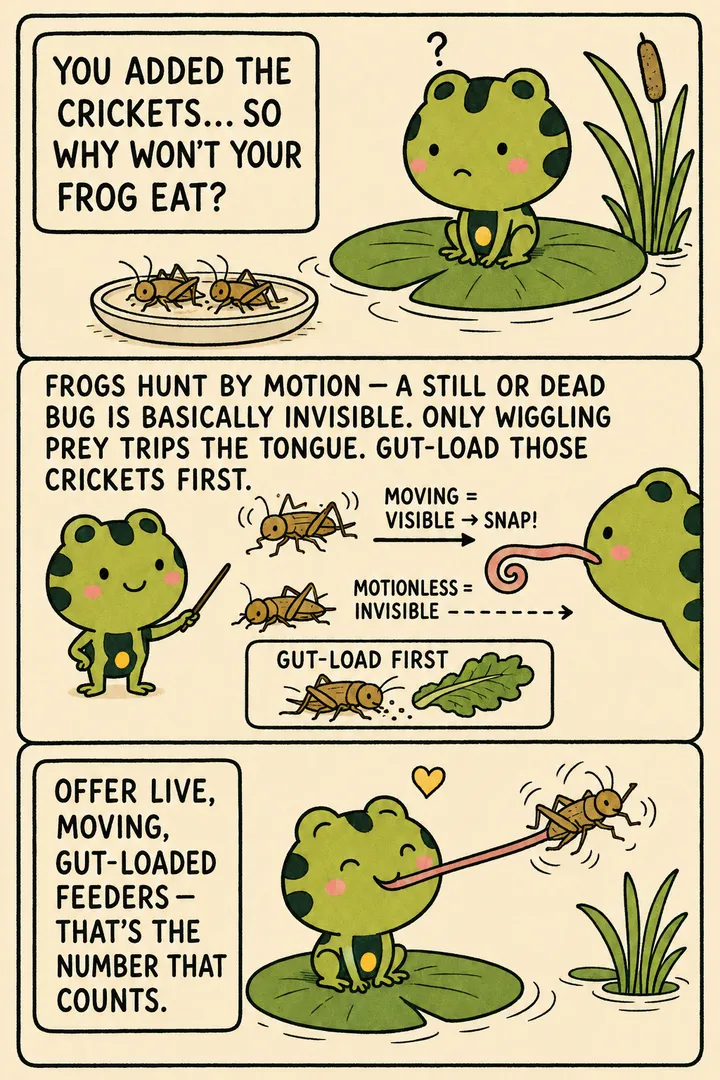
Why won’t my frog eat? Usually temperature or humidity is off, or it’s buried and aestivating (totally normal). A few days off food is fine; a week-plus with weight loss is the concern.
Housing
One frog or two? One. Always. Both species are cannibals and will eat a tankmate.
Do they need a big tank? A Pacman frog: 10–20 gallons. A bullfrog: much bigger (~36×18×18 in). Floor space over height, secure lid, deep moist coco fibre — never gravel (swallowed gravel can cause a fatal gut blockage).
Behaviour that worries new keepers
My frog buried itself and won’t come out — is it dead? Almost certainly not. Burrowing and going still (aestivation, sometimes forming a dry skin “cocoon”) is normal when conditions are a little off. Let it shed the cocoon itself — correct the warmth and raise the humidity, and it’ll surface on its own. Weeks buried with weight loss warrants a vet.
My frog sits in its water bowl constantly. Usually the tank is too hot or too dry — here’s what water-sitting means.
💚 Both of these frogs reward you for getting a few simple things right — substrate, warmth, humidity, sensible feeding — and asking for very little else. Respect the bite, never house two together, and enjoy the grumpy little (or enormous) blob.
Go deeper: Pacman frog care · African bullfrog care · Is my Pacman frog sick? · the Simple Setup checklist.
Common questions
Can you handle a Pacman frog or African bullfrog?
Not really — both are watch-don't-hold animals. They are ambush predators with a strong feeding response and will readily bite, and the African bullfrog's bite in particular is genuinely powerful. Their skin also absorbs oils and soaps from your hands. If you must move one, coax it into a container with clean, wet hands (or long tongs for a bullfrog) rather than picking it up.
How big do Pacman frogs and African bullfrogs get?
A Pacman frog stays palm-sized, roughly 4 to 7 inches. An African bullfrog is far larger — males reach about 8 to 9 inches and 2 to 3+ pounds, making them one of the biggest pet frogs. If you want the sit-and-wait charm without the size, the Pacman is the pocket version; the bullfrog is a genuine commitment to a huge frog.
How long do they live?
Pacman frogs commonly live 6 to 10+ years. African bullfrogs live much longer — generally 15 to 25 years, and one has been documented at 45. Both are real commitments, and the bullfrog especially is closer to adopting a parrot than a throwaway pet.
Can two Pacman frogs (or two bullfrogs) live together?
No — never house them together. Both species are cannibalistic and will try to eat a tankmate, even one of similar size. They are solitary animals: one frog per enclosure, always.
What size tank does each need?
A single adult Pacman frog is happy in a 10 to 20 gallon terrestrial tank. An adult African bullfrog needs a much larger footprint — around 36x18x18 inches. For both, floor space matters more than height (they are ground-dwellers, not climbers), and a secure, ventilated lid is essential.

Join the Bognook burrow
Cozy amphibian care tips, aesthetic freebies, and the occasional frog fact — straight to your inbox. No spam, just good bog vibes.
Free amphibian care cheat-sheet when you join. No spam — pinky-promise. Unsubscribe anytime. See how we handle your data in our privacy notice.