Is Room-Temperature Water Fine for Axolotls? Fact-Checked
🔍 Fact check
“Room-temperature water is fine for axolotls.” — A common pet-shop and beginner belief
Verdict: False
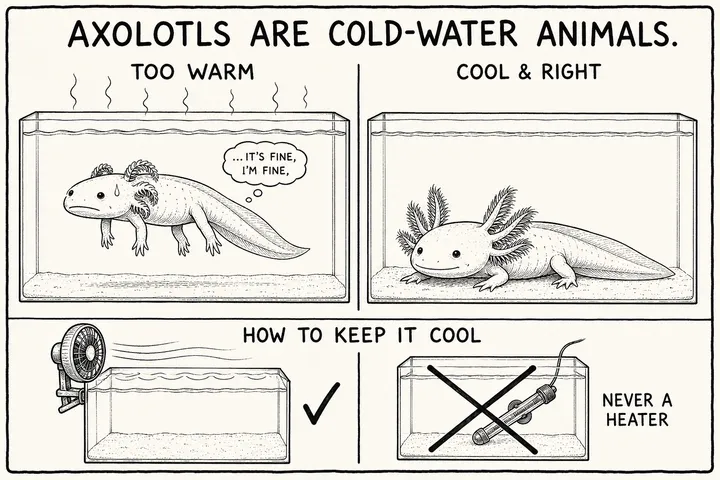
Axolotls are cold-water animals. Their healthy range is about 16–18°C (60–64°F), and above roughly 22–24°C (72–75°F) they become stressed and prone to disease. Most homes sit around 20–25°C, so "room temperature" is usually too warm — and sustained warmth can cause illness and death.
The evidence:
- Axolotls are cold-water animals. PetMD — reviewed by Jessie M. Sanders, DVM, CertAqV, a certified aquatic veterinarian — gives the target as roughly 16–18°C (60–64°F), with no aquarium heater and a chiller in warm climates.
- Above about 22–24°C (72–75°F) they become stressed and prone to disease. Warm water is an easy-to-miss cause of axolotl illness — floating, loss of appetite, and fungal or bacterial infections can trace back to water that is too warm (LafeberVet; Caudata Culture axolotl care sheet).
- Most homes are too warm. Typical indoor room temperature sits around 20–25°C, which is at or above the danger line — so "room temperature" is usually warmer than an axolotl should ever be kept.
- The fix is cooling, never heating. In summer, a fan blowing across the water surface or an aquarium chiller brings the temperature down. An aquarium heater should never be used on an axolotl tank.
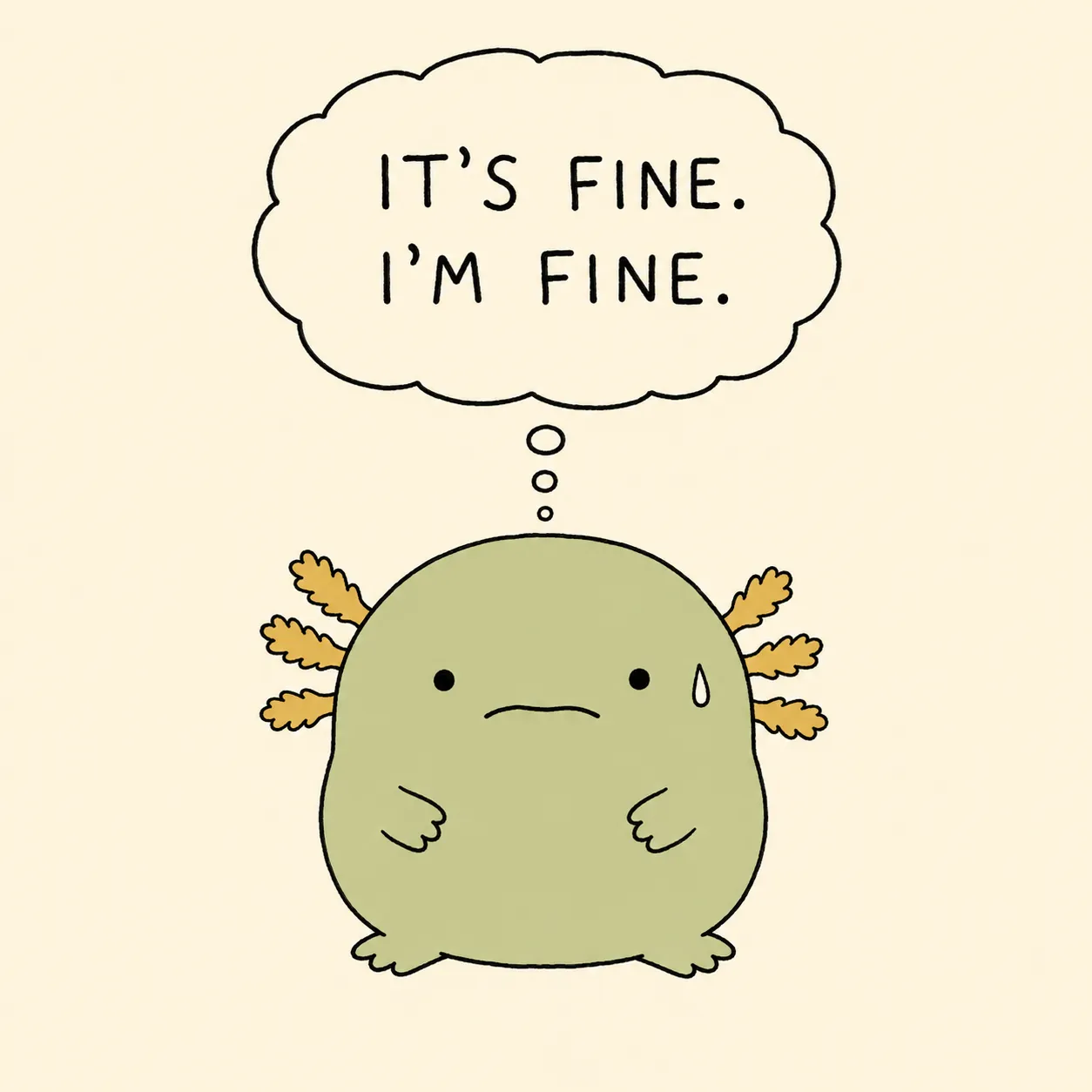
❄️ The short version: axolotls are cold-water animals. “Room-temperature water is fine” is false, and believing it is an easy way to accidentally make an axolotl sick. Keep the water at 16–18°C (60–64°F), never use a heater, and cool the tank in summer with a surface fan or a chiller. Most homes are warmer than an axolotl should ever be.
🔧 Not sure if the water’s the problem? Paste your readings into the free water interpreter — most axolotl trouble is really water trouble.
Why this myth spreads
It is an easy mistake to make. Axolotls are sold in ordinary unheated tanks, they do not look like they need anything special, and “room temperature” sounds like the safe, natural default. Pet shops repeat it because it is simple, and because a warm axolotl does not die overnight — it declines slowly, which hides the cause.
But axolotls come from cool, high-altitude water. They are built for the cold, and warmth is a slow, invisible stressor rather than an instant one. By the time the symptoms show, most keepers are looking for a disease when the real problem is the thermometer.
What the water should actually be
The husbandry consensus is narrow and well-established:
- 16–18°C (60–64°F) is the target range.
- Above ~22–24°C (72–75°F) is the stress zone — chronic warmth invites illness, especially fungal and bacterial infections.
- No aquarium heater, ever. The goal is to keep the water cool.
Warmth is an easy-to-miss cause behind the classic warning signs. If your axolotl is floating and can’t stay down, or has gone off its food, the first thing to check is the temperature — see Is my axolotl sick? 10 warning signs, where many signs trace back to water that is too warm or a water-quality problem.
How to keep it cool (the right way)
- A fan across the surface — the cheapest fix, cools by evaporation, good for a few degrees.
- An aquarium chiller — the reliable option in a genuinely warm climate.
- Frozen water bottles floated in the tank — a stopgap on a hot day.
- Avoid ice cubes straight in the tank — they swing the temperature, and sudden changes are their own kind of stress.
For the complete cold-water setup — tank size, cycling, and the parameters that go with the temperature — start with the Axolotl Care hub.
The honest takeaway: an axolotl kept cool, in cycled water, is genuinely hardy and beginner-friendly. Kept at “room temperature,” it is quietly being pushed toward illness. Get the cold water right and you have solved most axolotl problems before they start.
Sources & further reading
- PetMD, “Axolotl — Ambystoma mexicanum” — reviewed by Jessie M. Sanders, DVM, CertAqV (Certified Aquatic Veterinarian). The cool-water target: 16–18°C, no heater, a chiller in warm climates.
- Caudata Culture — Axolotl care sheet — the safe temperature range, and how warm water stresses axolotls into appetite loss and fungal or bacterial infections; its Caudate Illness article adds how warm water and poor water quality combine to cause illness.
- LafeberVet — Axolotl basic information sheet — water above 24°C (75°F) can cause overheating: poor or no appetite, fluid build-up, uncontrollable floating, and likely secondary bacterial infections.
Common questions
What temperature should axolotl water be?
About 16 to 18°C (60 to 64°F) is the sweet spot. They tolerate a little either side, but above roughly 22–24°C (72–75°F) they get stressed and sick, and sustained warmth can be fatal. Never use an aquarium heater — if anything, you are trying to keep the water cool, not warm.
Why is warm water so bad for axolotls?
Warmth stresses them, which is why so many "mystery" axolotl problems — floating, going off food, fungal or bacterial infections — can trace back to temperature. A warm, stressed axolotl is more likely to get sick. Cool water is the single biggest thing you control.
My room feels normal — is that really too warm?
Very likely, yes. Most homes sit around 20 to 25°C, which is at or above an axolotl safe limit. "Room temperature" feels comfortable to us, but it is warmer than a cold-water animal should live in. Measure the water with a thermometer rather than trusting how the room feels.
How do I cool an axolotl tank in summer?
For a few degrees, a small fan blowing across the water surface cools it by evaporation — the cheapest fix. Frozen water bottles floated in the tank help in a pinch. For reliable control in a warm climate, an aquarium chiller is the proper tool. Do not use ice cubes straight in the tank (they swing the temperature) and never a heater.
📚 More axolotls guides
- Axolotl Myths That Can Hurt Your Axolotl (With the Honest Facts)
- Axolotl vs Tiger Salamander: Will My Axolotl Turn Into a Salamander?
- What an Axolotl Setup Really Costs in 2026 (Full Breakdown)
- Axolotl Substrate: Sand vs Bare-Bottom vs Bioactive (and Why Not Gravel)
- Axolotl Morphs Explained: Leucistic, Albino, Melanoid, GFP & More
- Accidental Axolotl Eggs: What to Do With the Babies
🎓 Ready to go deeper?
Past the basics — same plain voice, no ceiling:

Join the Bognook burrow
Cozy amphibian care tips, aesthetic freebies, and the occasional frog fact — straight to your inbox. No spam, just good bog vibes.
Free amphibian care cheat-sheet when you join. No spam — pinky-promise. Unsubscribe anytime. See how we handle your data in our privacy notice.