Common myths about the tomato frog and its relatives, gently corrected — each one checked against a named source, never a pet-shop rumour.
“Tomato frogs are dangerously poisonous.”Mostly false
Not dangerously. Their red colour warns predators they taste bad, and a threatened tomato frog puffs up and may ooze a white, glue-like secretion that gums up a predator's eyes and mouth. Its defence is mainly sticky, not toxic, though the secretion can mildly irritate people. — Animal Diversity Web · Toronto Zoo · Organisms Diversity & Evolution (2013)
“A tomato frog that stays buried must be hibernating or sick.”Mostly false
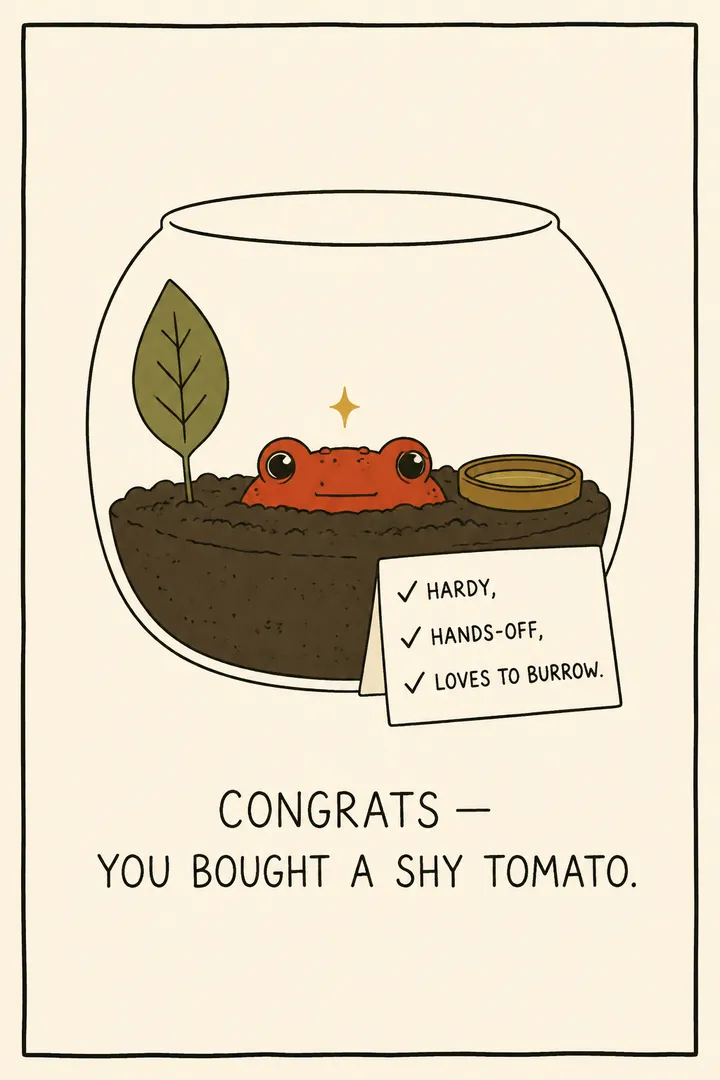
Not necessarily. Tomato frogs are burrowers: this species spends much of its time buried in soft soil or leaf litter, emerging at night to feed, and burrowing helps it avoid drying out. Staying dug in by day is typical — just give it soft, moist substrate to burrow into. — Toronto Zoo · Animal Diversity Web · Burpee Museum of Natural History
“Pacman frogs are active pets that need a big, elaborate setup.”
They are sit-and-wait ambush hunters, not built for chasing prey — they bury themselves and pounce on whatever wanders by, so they spend most of their lives still and buried. A modest, deep-substrate home suits them far better than a large busy enclosure. — American Museum of Natural History
“You can handle a pacman frog like a typical pet.”
Amphibians should be handled as little as possible — their absorbent skin picks up whatever is on your hands, and some release skin toxins. Pacman frogs also have big jaws and will lunge and bite, so they are a look-don't-handle pet. — Merck Veterinary Manual
“A pacman frog can safely eat anything and live with tankmates.”
They are voracious ambush feeders that pounce on almost any small animal that fits in their mouth, and horned frogs will even eat other frogs. That is exactly why they live alone and are offered appropriate, sized prey. — American Museum of Natural History
 Frogs
 Tomato Frog
 Free tools for the tomato frog


