← Amphibian glossary · 💧 Water

Nitrogen cycle

Also called: Cycling · Ammonia · Nitrite · Nitrate

The nitrogen cycle is the process of growing beneficial bacteria in a tank's filter that convert toxic ammonia (from waste) into nitrite and then far less harmful nitrate — a tank is "cycled" once this is established.
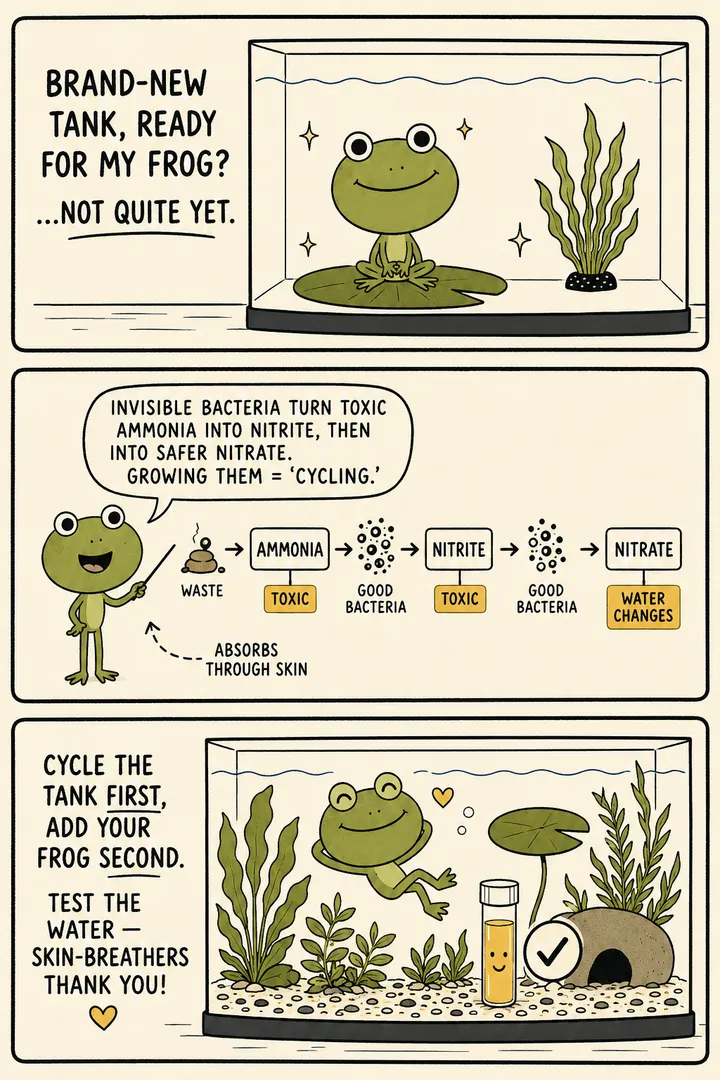
A three-panel explainer comic about the nitrogen cycle. A frog eyes a brand-new tank asking if it's ready — not quite yet. A diagram shows invisible beneficial bacteria turning toxic ammonia into nitrite and then into safer nitrate, labelled 'cycling'. The frog then moves in. The point: growing the bacteria that convert ammonia to nitrate is called cycling, and you cycle the tank first and add the animal second.
The nitrogen cycle is how a tank becomes safe: beneficial bacteria turn toxic ammonia into nitrite, then into far less harmful nitrate. Growing those bacteria is 'cycling' — do it before the animal moves in, never after.

Ammonia and nitrite must read 0 in a healthy aquatic setup; nitrate is kept low with water changes. "Cycling" a tank before adding an animal (usually 4–8 weeks) is the single most important step for axolotls and aquatic frogs — an uncycled tank is the most common way they get sick.

← Back to the full glossary

One less bit of jargon

Join the burrow for honest, jargon-free amphibian help — care, tools and cozy froggy joy. No spam, no gatekeeping.

Free amphibian care cheat-sheet when you join. No spam — pinky-promise. Unsubscribe anytime.