A Toad Lives in My Garden — How Do I Help It Thrive?
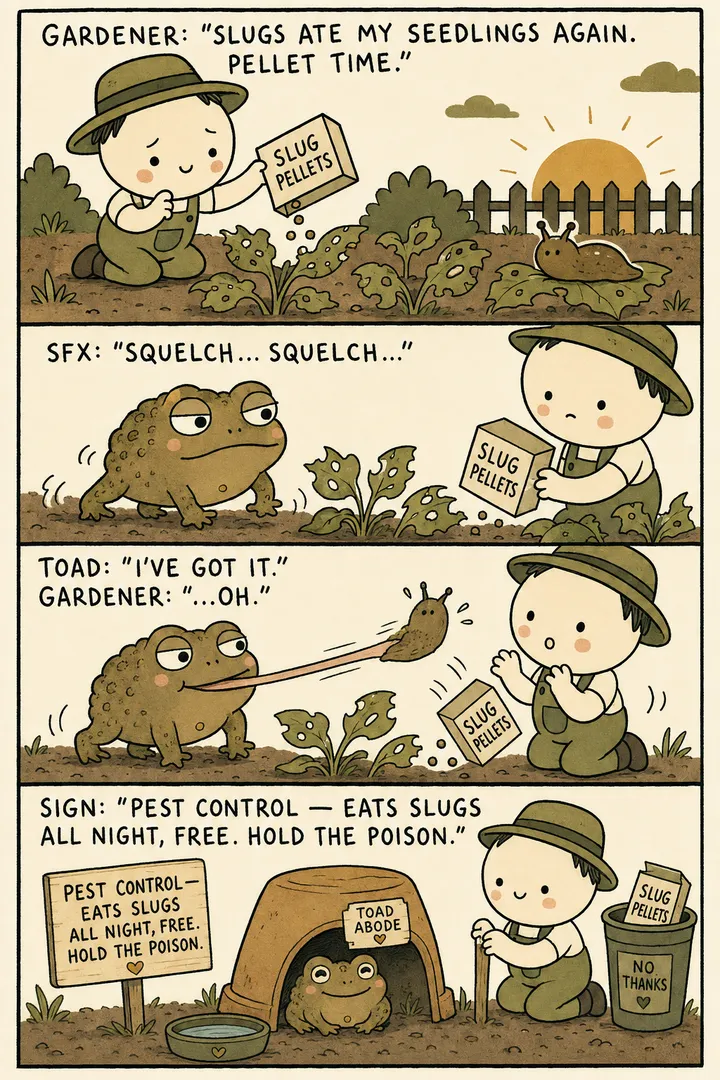
If a toad has taken up residence in your garden, congratulations — you’ve been chosen by one of the most useful, low-maintenance neighbours in the natural world. A garden toad is a free, tireless pest controller that asks almost nothing of you. Here’s how to help it thrive (and stick around).
🐸 Found one and not sure what to do first? Our I Found a Frog or Toad guide covers the “should I move it / help it?” basics. Short version: a garden toad is home — let it be, and make the garden welcoming.
🔧 Found one in the wild? The free found-an-amphibian guide walks you through what to do.
Why a garden toad is a gift
A single toad eats thousands of pest insects and slugs over a season — beetles, cutworms, mosquitoes, and the slugs chewing your seedlings. It does this quietly, for free, all night, every night. A toad in the garden is a sign of a healthy, working ecosystem, and the kindest thing you can usually do is simply let it stay and make life easy for it.
The three things a toad needs
Help a toad thrive with three simple provisions:
- No pesticides. This is the big one. Lawn chemicals and slug pellets poison the insects toads eat — and can harm the toad directly through its absorbent skin. Going pesticide-free is the single most important thing you can do (and the toad becomes your pest control instead).
- Damp, shady shelter. Toads need cool, moist hideaways for the day. Leave a log pile, leaf litter, dense low planting, or sink a broken/half-buried flowerpot on its side as a ready-made “toad house.”
- A toad-friendly water source. A shallow dish or a small wildlife pond with an easy, sloping exit (toads are poor swimmers). A pond turns your yard into an amphibian nursery.
The single best upgrade: a little pond
If you do one thing beyond ditching pesticides, add a small wildlife pond. It gives toads somewhere to breed and other amphibians somewhere to live, and it quietly transforms a garden into a haven. Here’s how to build a wildlife pond for frogs (toads love them too).
What not to do
- Don’t feed it. A wild toad feeds itself perfectly — support the insect food web instead.
- Don’t relocate it. It’s home; moving it far away does more harm than good.
- Don’t let pets harass it. Toads carry a mild defensive toxin — discourage dogs and cats from mouthing them, and wash hands after any contact. (In cane-toad areas, learn to tell natives from cane toads, which are far more toxic.)
💚 A garden toad is a small wild life that decided your patch was worth living in — that’s worth protecting. Skip the sprays, leave a damp corner and a bit of water, and you’ll have a loyal, slug-munching companion for years.
Go deeper: how to build a wildlife pond for frogs · I found a frog or toad — what should I do? · cane toad vs native toad.
Want more kind, practical ways to help the wild amphibians near you? Join the Bognook list below — no shame, no jargon, just good guidance.
Common questions
Is it good to have a toad in your garden?
Wonderful, yes. A single toad eats thousands of pest insects and slugs over a season — beetles, cutworms, mosquitoes, and more — making it one of the best natural pest controllers you can have, entirely for free. Toads are harmless to people and pets (beyond a mild skin secretion, so wash hands after any contact), ask almost nothing of you, and are a sign of a healthy garden. The kindest thing is usually to simply let it stay.
How do I attract toads to my garden and keep them?
Give them the three things they need: no pesticides (which poison the insects toads eat and can harm the toad), damp shady shelter (a log pile, leaf litter, dense planting, or a half-buried "toad house" flowerpot), and a shallow water source with an easy exit. A small wildlife pond is the single best addition. Provide those and toads will settle in and often return year after year.
Should I feed a wild garden toad?
No — a wild toad feeds itself perfectly well on the insects and slugs in your garden, which is exactly the point. Instead of feeding it, support the food web it relies on: stop using pesticides and slug pellets, and let some of the garden stay a little wild. That gives the toad a steady natural diet far better than anything you could offer.
Will a toad hurt my dog, cat, or kids?
Common native toads are safe to have around, with sensible care. They secrete a mild toxin from glands behind the eyes as a defence, which can make a curious dog drool or feel briefly unwell if it mouths one, so discourage pets from harassing toads and wash hands after any contact. This is different from invasive cane toads, which are far more toxic — if you are in an area where those occur, learn to tell them apart.

Join the Bognook burrow
Cozy amphibian care tips, aesthetic freebies, and the occasional frog fact — straight to your inbox. No spam, just good bog vibes.
Free amphibian care cheat-sheet when you join. No spam — pinky-promise. Unsubscribe anytime. See how we handle your data in our privacy notice.