Toad Care: The Complete Beginner's Guide (Setup, Feeding & Species)
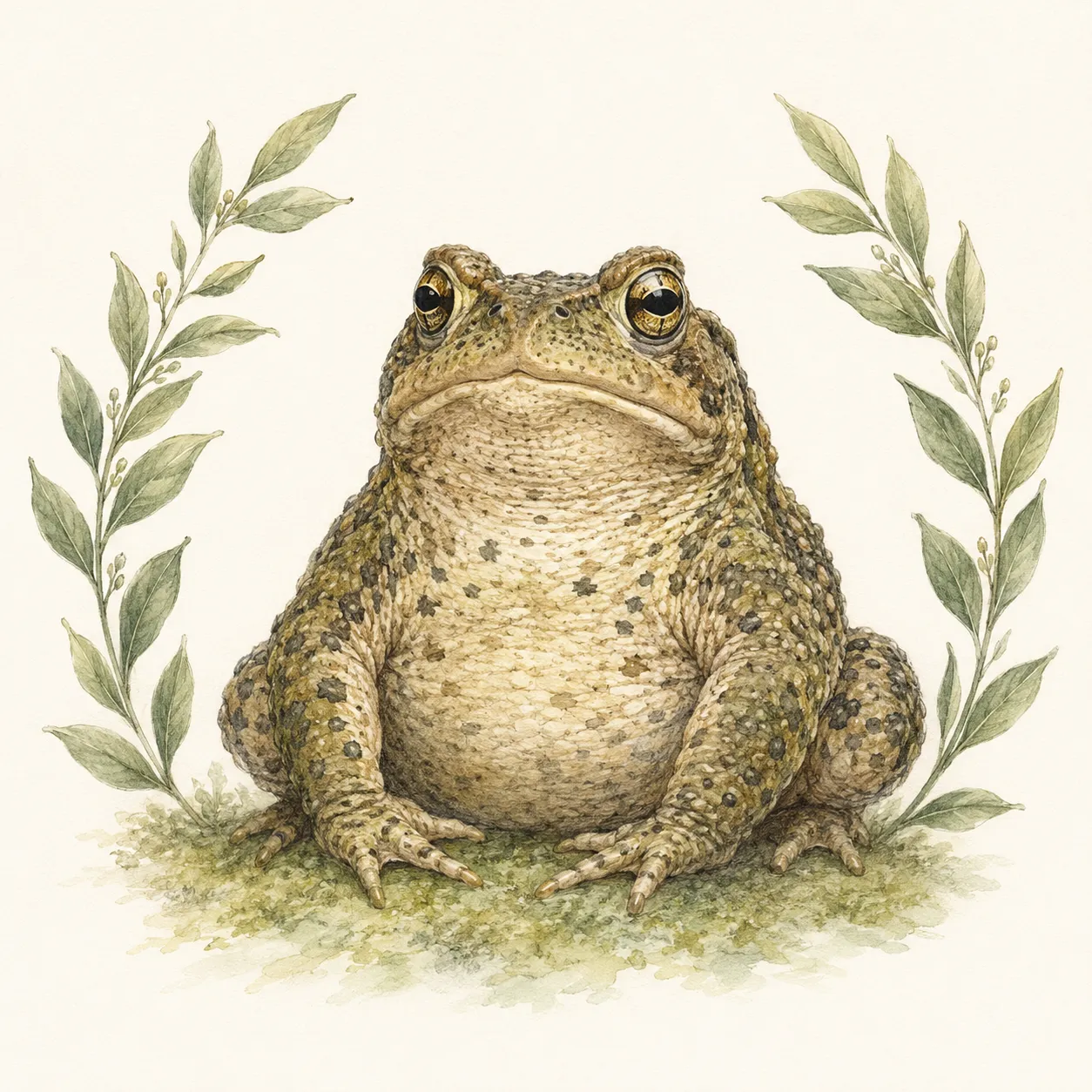
Toads are the chunky, charming, low-fuss members of the amphibian world — and honestly one of the best first amphibians you can keep. They’re hardy, forgiving of small mistakes, active and characterful at dusk, and famously long-lived. This guide covers everything a first-time keeper needs to get a toad set up and thriving.
🔧 Getting the setup right? Run through the free simple setup planner.
The 30-second version
- They’re a great beginner pet: hardy, forgiving, and long-lived (10–20+ years).
- They’re terrestrial burrowers: a ground-level terrarium with deep, moist substrate to dig into — floor space over height.
- They hydrate by soaking: always provide a shallow dish of dechlorinated water.
- Keep them cool: most pet toads want room temperature (~65–75°F) and no hot basking lamp.
- They’re insectivores: crickets and earthworms, dusted with calcium — and don’t overfeed.
- Mild toxins: safe to keep, but wash your hands before and after, and keep them away from pets.
Is a toad right for you?
Toads are wonderfully undramatic — but “easy” isn’t “no commitment”:
- Lifespan: commonly 10–20 years, and some live far longer. This is a genuine long-term pet.
- They’re nocturnal-ish burrowers. A healthy toad often spends the day hidden and comes alive at dusk — so “I rarely see it” is normal, not a problem.
- They’re for watching, mostly. Brief, clean-handed handling is fine occasionally, but they’re not a cuddle pet.
- Live feeders forever. You’ll keep crickets or a worm supply going.
If a calm, hardy, long-lived amphibian that mostly minds its own business appeals to you, a toad is a brilliant choice.
Best beginner species
- American toad (Anaxyrus americanus) — a native, temperate, bombproof starter. Room-temperature tolerant and very forgiving.
- Fire-bellied “toad” (Bombina orientalis) — hugely popular and beginner-friendly, but note it’s actually semi-aquatic and technically not a true toad: it needs a half-land, half-water setup rather than a dry burrowing terrarium. Great frog, just a different setup — plan for water.
- European common toad (Bufo bufo) and other temperate toads — similar easy, cool-climate care.
Avoid as a first toad: cane toads (Rhinella marina) and desert toads like the Sonoran/Colorado River toad — they’re large and hardy but far more toxic, and cane toads are invasive and illegal to keep in many places. Check your local laws before buying any toad.
The setup: a terrestrial burrow
Toads live on and in the ground, so build down, not up.
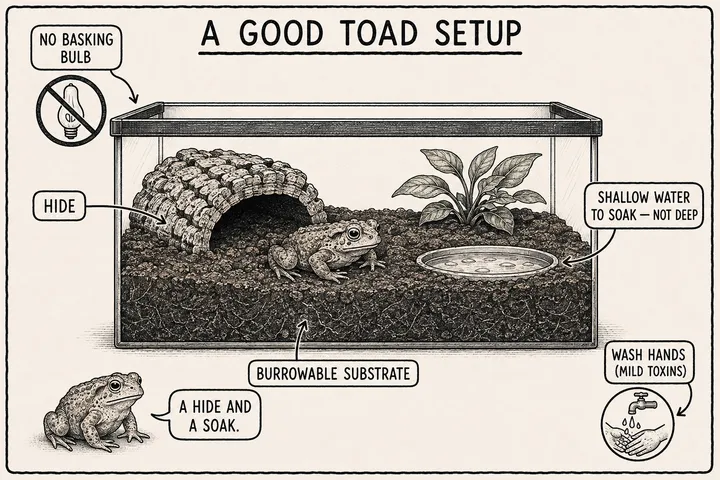
- Enclosure: a terrestrial terrarium, ~10–20 gallons for one toad, with a secure lid. Floor space beats height.
- Substrate: several inches of a deep, moist (not soggy) burrowing mix — coco fibre, organic topsoil, or a blend — deep enough for the toad to dig in and disappear. A bioactive setup with springtails/isopods and leaf litter works beautifully and helps keep it clean.
- Hides & cover: at least one or two hides (cork bark, half logs) and some plants or leaf litter so the toad feels secure.
- Water dish: a shallow dish of clean, dechlorinated water, big enough to sit in and easy to climb out of. Toads hydrate by absorbing water through a patch of skin on their belly, not by drinking, so the soak dish is essential — and needs frequent cleaning, since they’ll often poop in it.
Temperature & moisture
- Temperature: most pet toads are temperate and want room temperature (~65–75°F) — cooler than tropical amphibians. No hot basking lamp, and keep the tank out of direct sun and away from radiators; overheating is dangerous. (Warmth-loving tropical toads are the exception — match your species.)
- Moisture: keep the substrate damp but not waterlogged, and mist lightly as needed. The soak dish plus moist substrate usually keeps humidity in a comfortable range without fuss.
Lighting
Toads are nocturnal and don’t need intense lighting, but a low-level UVB bulb on a ~12-hour day/night cycle is beneficial for their bone health (it helps them use calcium). Always give shaded hides so they can escape the light. Remember UVB is not a heat source — don’t let any lamp push the temperature up.
Feeding & supplementation
Toads are enthusiastic insectivores:
- Staples: crickets and earthworms (earthworms are an excellent, nutritious staple), plus dubia roaches for variety.
- Supplement: dust feeders with calcium, and add a vitamin D3/multivitamin periodically, to prevent metabolic bone disease.
- Size & method: nothing wider than the toad’s mouth; offer prey on a dish or with tongs so the toad doesn’t gulp loose substrate (a common cause of impaction).
- Frequency & portions: adults every 2–3 days; juveniles more often. Toads are greedy and get fat easily — feed sensibly and skip the fatty treats.
Handling & safety
Toads secrete a mild defensive toxin from the parotoid glands behind their eyes. They’re safe to keep and gently handle, but:
- Minimise handling — their skin absorbs oils, soaps, and residues.
- Wash and rinse your hands before (to protect the toad) and after (to protect you), and never touch your eyes or mouth in between.
- Keep toads away from dogs and cats, which can be seriously harmed by mouthing one.
Buying, health & the golden rules
- Buy captive-bred, and don’t take a wild toad — it’s better for the ecosystem, often legally required, and wild toads carry parasites.
- Quarantine new arrivals before adding them near other animals.
- Keep the basics right — cool room temp, moist substrate, a clean soak dish, dusted feeders, and no loose grit to swallow — and toads are remarkably trouble-free. When something does look off, see our full guide to the warning signs a toad is sick (including impaction and dehydration).
What it costs
- Terrarium + setup (tank, substrate, hides, dish, lighting): roughly $80–200 to start.
- The toad: about $10–40, captive-bred (temperate species are often inexpensive).
- Ongoing: feeders + supplements, roughly $10–15/month.
💚 Give a toad damp substrate to burrow in, bugs to hunt, and a dish to soak in, and it’ll happily outlast a lot of things in your life. They’re one of the calmest, most forgiving amphibians you can keep.
Go deeper: warning signs your toad is sick · toad questions answered · I found a frog or toad — what should I do? · cane toad vs native toad · the printable toad care sheet · which amphibian is the best beginner pet?
Sources & further reading
This guide was written and fact-checked against these authorities. It’s kind, general guidance — not a substitute for an exotics vet:
- Merck Veterinary Manual — Environment and Husbandry for Amphibians — amphibian husbandry, UVB and calcium supplementation, and the gravel rule (too large to swallow, or small enough to pass).
- Association of Reptilian & Amphibian Veterinarians (ARAV) — amphibian veterinary standards and a find-an-exotics-vet directory.
- PetMD — Pet Toad Care Sheet (Maria Zayas, DVM) — toad temperature needs, feeding and handling safety.
- Established temperate-toad care references — enclosure size, deep moist substrate, a soak dish, and captive-bred sourcing.
Written and fact-checked by The Bognook Team against veterinarian-authored sources — if a toad seems unwell, see an exotics vet.
Common questions
Are toads good beginner pets?
Yes. Toads are among the hardiest, most forgiving, and longest-lived amphibian pets, which makes them one of the best first amphibians for a prepared keeper. They tolerate ordinary room temperature, eat readily, and are wonderfully undramatic — give them moist substrate to burrow, insects, and a dish to soak in, and they thrive. Just be ready for a 10 to 20+ year commitment.
What size tank does a pet toad need?
A terrestrial terrarium of about 10 to 20 gallons suits one toad, with floor space mattering far more than height since toads are ground-dwelling burrowers rather than climbers. The key features are several inches of deep, moist substrate to dig into, a hide or two, and a shallow dish of dechlorinated water large enough to sit in. Bigger is always better.
What do toads eat?
Toads are insectivores. Good staples are crickets and earthworms, supported by dubia roaches and the occasional treat, all dusted with a calcium (and periodic vitamin D3/multivitamin) supplement. Feed correctly sized prey — nothing wider than the toad's mouth — and offer it on a dish or with tongs so the toad doesn't swallow loose substrate. Adults eat every two to three days; toads are greedy, so don't overfeed.
Do toads need a heat lamp?
Most popular pet toads are temperate species (like the American toad) that do well at ordinary room temperature, roughly 65 to 75F, and do not need a hot basking lamp — in fact overheating is dangerous for them. Keep the terrarium out of direct sun and away from heat sources. A low-level UVB light is beneficial but not a heat source, and warmth-loving tropical species are the exception rather than the rule.
Can I keep a wild toad I found?
In most cases it is best — and sometimes legally required — to leave wild toads where you found them. They are part of the local ecosystem and can carry parasites and diseases, and keeping a native without a permit is usually illegal. Check your local wildlife laws, and if you want a pet toad, buy a captive-bred one from a reputable source instead. If you have just found one and are not sure what to do, see our guide: I Found a Frog or Toad — What Should I Do?

Join the Bognook burrow
Cozy amphibian care tips, aesthetic freebies, and the occasional frog fact — straight to your inbox. No spam, just good bog vibes.
Free amphibian care cheat-sheet when you join. No spam — pinky-promise. Unsubscribe anytime. See how we handle your data in our privacy notice.