← Amphibian glossary · 🧬 Biology

Metamorphosis

Metamorphosis is the transformation an amphibian goes through from an aquatic, gilled larva into its adult form — for example a tadpole becoming a froglet, or a larval salamander losing its gills and moving onto land.
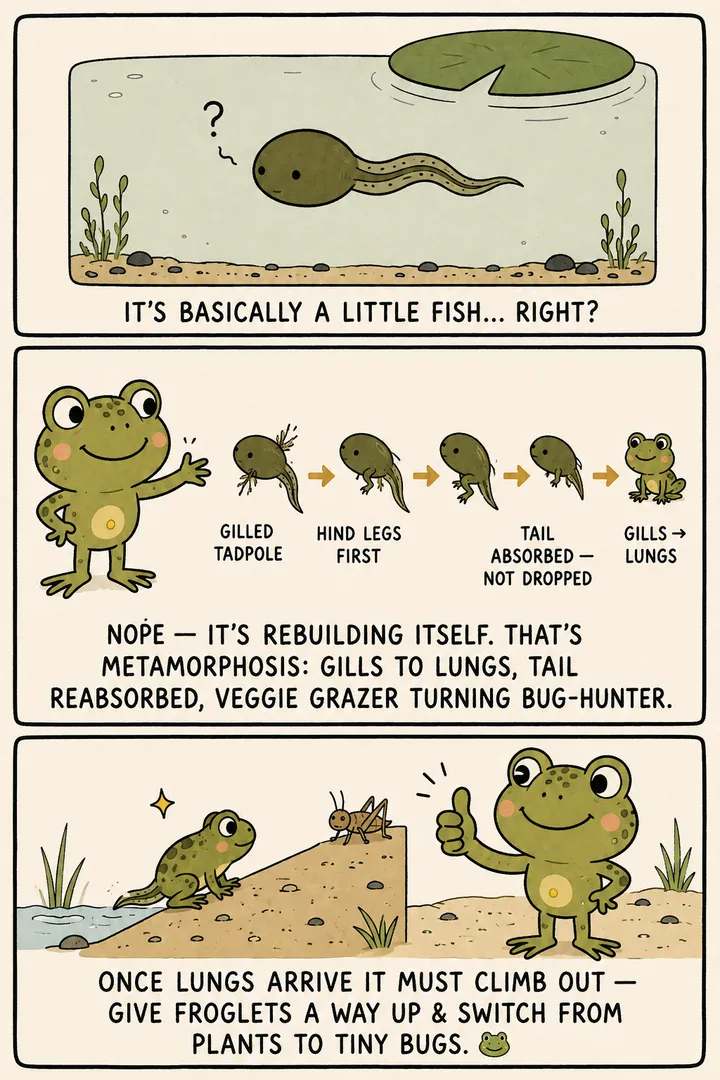
A two-panel explainer comic about metamorphosis. A keeper assumes a tadpole is basically a little fish. A narrator corrects it: metamorphosis is the animal rebuilding itself — gills becoming lungs, the tail reabsorbed, a plant-grazer becoming a bug-hunter. The point: metamorphosis is the dramatic body remodelling from tadpole to frog, not just growth.
Metamorphosis is a tadpole rebuilding itself into a frog: gills become lungs, the tail is reabsorbed, and a plant-grazer becomes an insect-hunter. It's a whole-body remodelling — far more than just getting bigger.

Most amphibians metamorphose: frogs and toads go from tadpole to froglet, and many salamanders and newts hatch as gilled aquatic larvae before absorbing their gills and becoming terrestrial or semi-aquatic adults.

Neotenic species like the axolotl are the exception — they skip metamorphosis and stay aquatic for life.

← Back to the full glossary

One less bit of jargon

Join the burrow for honest, jargon-free amphibian help — care, tools and cozy froggy joy. No spam, no gatekeeping.

Free amphibian care cheat-sheet when you join. No spam — pinky-promise. Unsubscribe anytime.