← Amphibian glossary · 🔄 Behaviour

Brumation

Brumation is a reptile-and-amphibian version of hibernation — a cold-season slow-down where the animal becomes inactive and stops eating in response to cooler, shorter days.
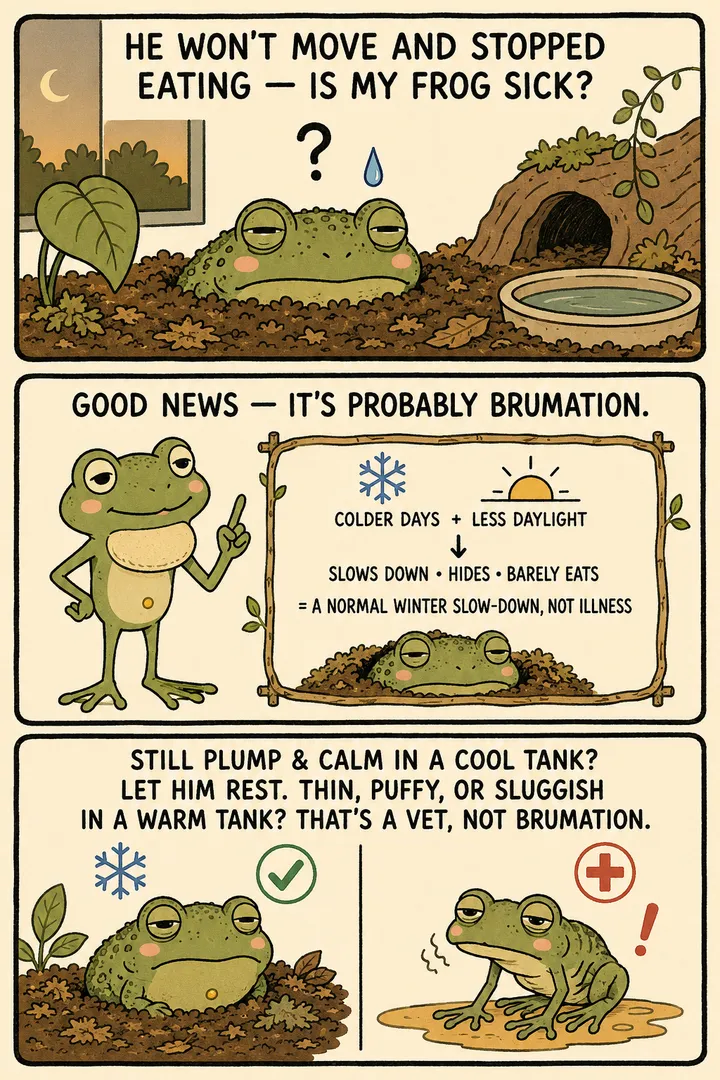
A two-panel explainer comic about brumation. A keeper worries their frog won't move and has stopped eating. A narrator reassures that it's probably brumation: colder days and less daylight make the animal slow down, hide, and barely eat — a normal winter dormancy. The point: seasonal slowing and fasting in cool conditions is usually brumation, not sickness, as long as body condition is good.
Brumation is a normal winter dormancy: shorter, colder days make an amphibian slow down, hide, and barely eat. In a healthy animal in good body condition that's normal, not illness — a worry only with weight loss, sunken eyes, or sores.

Temperate species (some toads, salamanders and newts) may naturally slow down in winter. It should only happen in a healthy, good-weight adult, and many keepers simply keep conditions stable year-round to avoid it. Note that "fridging" a sick axolotl is a vet-directed treatment, not brumation.

A buried, dormant-looking animal that is holding weight is usually fine; one that is thin, weak or has a red flag is not — that's a vet call.

← Back to the full glossary

One less bit of jargon

Join the burrow for honest, jargon-free amphibian help — care, tools and cozy froggy joy. No spam, no gatekeeping.

Free amphibian care cheat-sheet when you join. No spam — pinky-promise. Unsubscribe anytime.