My Tree Frog Escaped! How to Find It (and Escape-Proof the Tank)
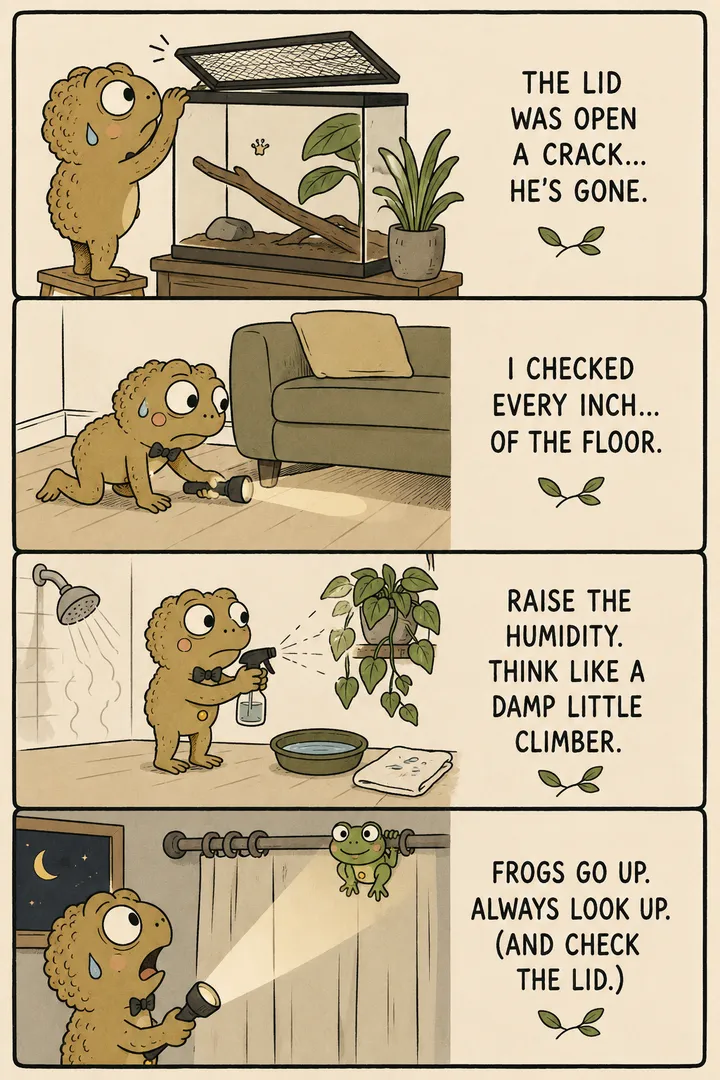
First: don’t panic. An escaped tree frog is a common (if heart-stopping) part of keeping these sticky-footed little climbers, and most are found safe within a day or two — usually not far from where they slipped out. Here’s how to get yours back, and make sure it doesn’t happen again.
🐸 Once it’s home safe, double-check the setup with the tree frog care basics — most escapes trace back to a lid that didn’t quite close.
Act fast: the clock is humidity
A tree frog’s biggest enemy out of the tank is drying out. Its skin loses moisture quickly, so the first thing to do — even before you find it — is make the room survivable:
- Seal the room (close doors, block gaps under them) so it can’t roam further.
- Raise the humidity — run a shower for steam, set out bowls of water, mist plants.
- Put down lures: damp towels, a shallow dish of dechlorinated water, and a potted plant or two. A thirsty frog heads for moisture.
Where to look (high and damp)
Tree frogs climb and hide in cool, moist, dark spots. In rough order:
- Up high — curtains, curtain rails, door tops, walls, picture frames, bookshelves.
- Houseplants — they’ll happily settle into the leaves of a pothos or fern.
- Cool damp cover — behind the toilet, under the fridge, under/behind furniture, near sinks and drains.
- Small gaps — they tuck into surprisingly tight spaces and sit dead still by day.
Search at night with a flashlight
This is the big one: tree frogs are nocturnal, so they mostly stay hidden and still during the day and move (and sometimes call) after dark. Turn the lights off, wait, and sweep the room with a flashlight — a still frog’s eyes and damp skin catch the light, and a calling male may give himself away. Many “lost” frogs are found on the second night once they start moving.
Gentle recovery
When you spot it, wet your hands (clean, well-rinsed, lotion-free) and cup it gently, or coax it into a container — don’t grab. Back into a humid vivarium it goes, with clean water, and let it rehydrate and settle.
Escape-proof the tank so it never happens again
Almost every escape is a lid problem. Fix these and you’re set:
- A secure, well-fitted lid with locking clips — tree frogs are strong and can push up a loose top.
- Seal the gaps around filter cords, misting lines, and lid cutouts — the classic escape route.
- Check it closes flush — no bowed corners or propped edges.
- Always double-check the latch after feeding or misting (that’s when most escapes happen).
Their sticky toe pads let them scale glass and squeeze through tiny openings, so “mostly closed” isn’t closed.
💚 Escapes happen to careful keepers too — it’s part of living with an acrobat. Keep the room humid, search high and at night, and fix the lid, and you’ll have your little climber back on its branch in no time.
Go deeper: tree frog care basics · tree frog questions answered · Is my tree frog sick?.
Common questions
How do I find an escaped tree frog?
Search at night with a flashlight, because tree frogs are nocturnal and will move (and sometimes call) after dark. Check high first — curtains, curtain rails, the tops of doors, picture frames, and houseplants — since tree frogs climb. Then check cool, damp, dark spots: behind the toilet, under the fridge, sinks, and houseplant pots. Seal the room, keep it humid, and put down damp towels and a shallow water dish to lure it to moisture. Most escapees are found within a day or two, close to where they got out.
How long can a tree frog survive outside its tank?
It depends heavily on humidity. In a dry room a tree frog can dehydrate dangerously within a day or so, but in a humid house, near plants, or in a damp bathroom it can last several days. Because their skin dries out fast, treat an escape as urgent, raise the humidity in the room, and provide damp hiding spots and water while you search — that buys the frog time.
Where do tree frogs hide when they escape?
High and damp. Tree frogs climb, so check curtains, curtain rails, door tops, walls, bookshelves, and houseplants first. They also seek cool, moist, dark cover — behind or under furniture, behind the toilet, under the fridge or sofa, and inside potted plants. They tuck into surprisingly small gaps and stay still by day, so look carefully and search again at night when they move.
How do I stop my tree frog escaping again?
Use a secure, well-fitted lid with locking clips, and seal every gap — especially the cutouts around filter cords, misting lines, and lids that do not close flush. Tree frogs are strong climbers with sticky toe pads and can squeeze through tiny openings and push up loose lids, so check the enclosure closes completely and always double-check it is latched after feeding or misting.

Join the Bognook burrow
Cozy amphibian care tips, aesthetic freebies, and the occasional frog fact — straight to your inbox. No spam, just good bog vibes.
Free amphibian care cheat-sheet when you join. No spam — pinky-promise. Unsubscribe anytime. See how we handle your data in our privacy notice.