Advanced Bioactive Dart Frog Vivarium: Drainage & Microfauna
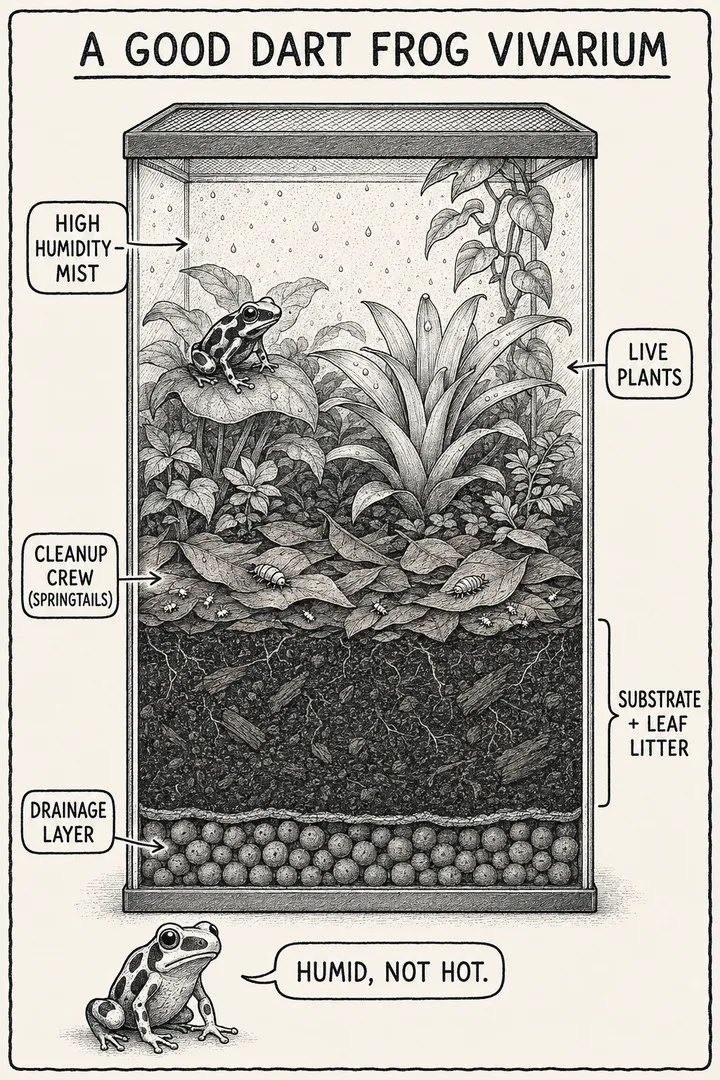
Poison dart frogs are the species bioactive vivaria were practically invented for — and once you’ve kept them on a starter setup, building a proper living rainforest is the natural next step. This is the advanced build companion to our Poison Dart Frog Care: Complete Beginner’s Guide — that walks you through your first bioactive setup; this goes deeper into the engineering: drainage, substrate, the microfauna that clean and feed, and how to hold a rainforest climate without mould.
🐸 The 30-second version: darts want a living, planted, humid rainforest. Build it in layers — a drainage reservoir (false bottom or LECA under mesh), an ABG substrate, and leaf litter on top. Seed a cleanup crew of springtails + tropical isopods — which doubles as frog food — and let it establish before the frogs go in. Hold 80–100% humidity with airflow (humid, not stagnant), plant broms and climbers, and expect real, if light, maintenance. Use the vivarium builder to plan it.
Why bioactive is the dart frog standard
Dart frogs are tiny, sensitive, humidity-loving rainforest animals that live among leaf litter and plants. A bioactive vivarium isn’t a luxury for them — it’s the setup that best matches their biology: it stabilises humidity, processes waste in place, grows live plants they shelter in, and even produces some of their food. In our dart-frog demand, “isopods,” “bioactive,” and vivarium build questions are the advanced cluster keepers reach for once the basics click. So here’s the build in proper depth.
Layer 1: the drainage reservoir
The foundation is a water reservoir below the soil so the substrate stays moist but never waterlogged (waterlogged soil goes sour and kills plants, microfauna, and eventually frogs). Two standard approaches:
- False bottom — egg-crate raised on supports (or a commercial matrix), with a screen/mesh on top to hold the substrate up. Light, and gives a big water gap you can siphon.
- LECA / clay balls — a layer of expanded clay under a mesh substrate barrier. Simpler and cheaper.
Either way, add a way to check and siphon the water table (a corner drain tube or a bulkhead). This is the single most important structural choice in the build.
Layer 2: the ABG substrate + leaf litter
Over the drainage barrier goes the hobby-standard ABG-type mix — a blend of tree-fern fibre, peat/coco, charcoal, sphagnum and fine bark. It holds moisture, feeds plant roots and microfauna, resists compaction, and doesn’t sour. Avoid plain garden soil or anything fertilised.
Top it with a generous layer of dried leaf litter (magnolia, oak) — this isn’t decoration: it’s habitat for the cleanup crew and essential cover for tiny, shy froglets.
Layer 3: the microfauna — cleanup crew and feeders
Here’s the part that makes dart-frog bioactive special. Your cleanup crew is also a food source:
- Springtails — break down mould and waste, and dart frogs eat them (especially froglets).
- Tropical dwarf isopods (dwarf whites, dwarf purples, etc.) — process leaf litter and waste.
Seed both and let them establish for a few weeks before the frogs go in, and — crucially — keep separate booster cultures of springtails (and fruit flies, the staple feeder) going on the side so you can top the vivarium up and never run short. A dart vivarium and a shelf of feeder cultures go together.
Layer 4: plants — especially broms
Dart frogs are rainforest-floor and low-canopy animals, so plant for cover and microhabitat:
- Bromeliads — mounted or planted; their leaf axils hold water and become egg/tadpole deposition sites for breeding frogs (see breeding dart frogs & raising tadpoles).
- Pothos, ferns, mosses, small climbers — cover, humidity, and vertical structure.
Confirm every plant is clean of pesticides (rinse/quarantine nursery plants) — residues are lethal to tiny frogs.
The climate: humid and airy
The classic mistake is treating “humid” and “ventilated” as opposites. They’re not:
- Mist once or twice daily (dechlorinated or RO water) and use a glass top to hold 80–100% humidity.
- Include a ventilation gap or vent strip so air moves — high humidity plus stagnant air is what breeds mould and bacteria.
- Keep it cool — darts do not want heat; most do best in the mid-60s to high-70s °F, and overheating is a real killer (work from the dart frog care sheet for your species).
Maintenance: lighter, not zero
Once cycled, a bioactive dart vivarium is low-maintenance, not no-maintenance:
- Prune plants, wipe the glass, and top up microfauna from your booster cultures.
- Watch for over-wet or stagnation — persistent mould or a sour smell means too wet / too little airflow; a healthy springtail population and better ventilation fix it.
- Rotate feeder cultures so you always have fruit flies and springtails ready.
- Siphon the drainage layer occasionally if it fills.
When to keep it simpler
For a new, quarantined, or unwell frog, a simple, easy-to-inspect setup (damp paper towel / sphagnum, hides) is better — you can see every frog and every dropping, and rule out parasites, which a densely planted vivarium makes harder. Move to the full bioactive build once the frog is settled and healthy.
💚 A properly built bioactive vivarium is the closest most of us get to keeping a slice of living rainforest — and for dart frogs it’s genuinely the best home there is. Engineer the drainage, seed the microfauna, keep it humid and airy, and you’ve built something that feeds itself, cleans itself, and shows your little frogs at their boldest.
Go deeper: the beginner build first → Poison Dart Frog Care: Complete Guide · plan the layout → vivarium builder · breeding in a planted viv → breeding dart frogs & raising tadpoles · warning signs → is my dart frog sick? · more real questions → dart frog questions answered.
Sources & further reading
This guide was written and fact-checked against these authorities. It’s honest general guidance — not a diagnosis:
- Dartfrog/vivarium-keeping community standards (ABG substrate, false-bottom vs LECA drainage, springtail + isopod culturing) — long-established across the poison-frog hobby; named here in plain text.
- Josh’s Frogs — Bioactive substrate in your dart frog vivarium, Josh’s Frogs — Microfauna in your bioactive dart frog vivarium & Josh’s Frogs — So you think you want dart frogs? — bioactive vivarium construction, microfauna, and dart frog husbandry.
- Our own fact-checked dart frog care basics and care sheet — for species temperatures, humidity, and feeding.
Written and fact-checked by The Bognook Team against veterinarian-authored sources — if a dart frog in a humid vivarium becomes lethargic, bloated, or stops eating, check ventilation and water quality and see an exotics vet.
Common questions
Do poison dart frogs need a bioactive vivarium?
Effectively yes — dart frogs are the species bioactive keeping was almost designed for. They're tiny, sensitive to poor water quality, and thrive in a humid, planted rainforest with a living cleanup crew, and a bioactive vivarium keeps humidity stable, processes their waste, and even grows some of their food. You can keep them on a simpler setup short-term, but a well-built bioactive vivarium is the standard for a reason: it suits their biology better than anything else.
What drainage layer should a dart frog vivarium have — false bottom or LECA?
Either works; both create a water reservoir below the soil so it stays moist but never waterlogged. A false bottom (egg-crate raised on supports with a screen on top) is light and gives a large water gap; LECA/clay balls under a mesh barrier is simpler and cheaper. Whichever you choose, the goal is the same: excess misting water drains below the substrate, you can siphon it out, and the frogs' soil never turns into stagnant mud.
What substrate do dart frogs need?
The hobby standard is an ABG-type mix (a blend of tree fern fibre, peat or coco, charcoal, sphagnum and fine bark) over the drainage layer, topped with leaf litter. It holds moisture, supports plant roots and microfauna, resists compaction, and doesn't go sour. Avoid plain garden soil or anything with fertiliser. A generous layer of dried leaf litter on top is essential — it's habitat for the cleanup crew and cover for froglets.
What cleanup crew do dart frogs need — and do the frogs eat it?
Springtails and tropical dwarf isopods, and yes — this is the clever part. Springtails and small isopods break down waste and mould, and dart frogs also eat springtails as a supplementary food, so your cleanup crew doubles as a feeder culture. Seed the vivarium with springtails and isopods and let them establish before the frogs go in, and keep separate booster cultures going so you can top up the population.
How do I keep humidity at 80–100% without getting mould?
Combine high humidity with airflow — the two aren't opposites. Mist once or twice daily (dechlorinated or RO water), use a glass top to hold humidity, but include a small ventilation gap or vent strip so air moves and never goes stagnant. A thriving springtail population eats surface mould (which is normal in a new build), live plants transpire moisture, and the drainage layer stops the soil going soggy. Stagnant, waterlogged, no-airflow tanks are what actually cause mould and sick frogs.

Join the Bognook burrow
Cozy amphibian care tips, aesthetic freebies, and the occasional frog fact — straight to your inbox. No spam, just good bog vibes.
Free amphibian care cheat-sheet when you join. No spam — pinky-promise. Unsubscribe anytime. See how we handle your data in our privacy notice.