 The Fire-Bellied Toad Care Cheat-Sheet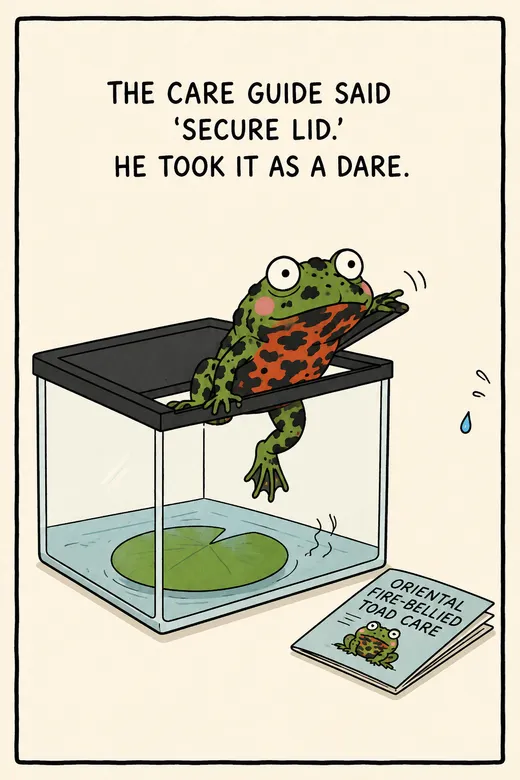
 Bognook honest amphibian care · bognook.com
  Fire-Bellied Toad — Care Cheat-Sheet Beginner
 Hardy, active and cheap to keep — just wash your hands (mild skin toxins).
📋 At a glance
- Tank
- Semi-aquatic 10–15 gal / 18×18×18 (2–3) — half land, half shallow water
- Temp
- 75–78°F day · nights no lower than ~65°F · never above ~82°F · no hot basking bulb
- Humidity
- 60–70%, with a shallow dechlorinated water area
- Food
- Gut-loaded, calcium-dusted crickets, worms, small roaches
- Lifespan
- 10–15+ years (some over 20)
- Light
- Low-level UVB (a 2.0–5.0 bulb) 10–12 h a day + calcium dusting
✅ Bold, active and social — one of the few amphibians that is genuinely lively by day.
🛒 Before you buy
- A semi-aquatic setup: sloped land + 1–2 in of dechlorinated water
- A TIGHT lid — they climb and escape
- Gentle filtration or a plan for frequent water changes
- A calcium supplement
A healthy one: Plump and active · bright belly · clear eyes · smooth skin · using both land and water.
🚨 See a vet / act now if…
- Bloating or floating
- Red, raw skin (usually poor water quality)
- Not eating, or weight loss
- Cloudy eyes or persistent lethargy
Cool them down, reduce stress, and contact an exotics vet — most issues are reversible if caught early.
⛔ Never
- Skipping hand-washing (mild toxins — never touch eyes/mouth)
- Housing with other species (toxins harm tankmates)
- Chlorinated water
🌿 Golden rules (all amphibians)
- Cycle the tank BEFORE the animal (ammonia = 0).
- Always dechlorinate tap water.
- Cool beats warm — most amphibians are cool/cold species.
- Look, don’t handle — their skin absorbs oils & soaps.
- Buy captive-bred, never wild-caught. Quarantine new arrivals.
- Never release a pet into the wild (it spreads disease).
- A real setup costs more than the animal — budget for it.
- When in doubt, ask — no shame in learning. 💚
