 The African Bullfrog (Pixie) Care Cheat-Sheet
 Bognook honest amphibian care · bognook.com
 African Bullfrog (Pixie) — Care Cheat-Sheet Beginner
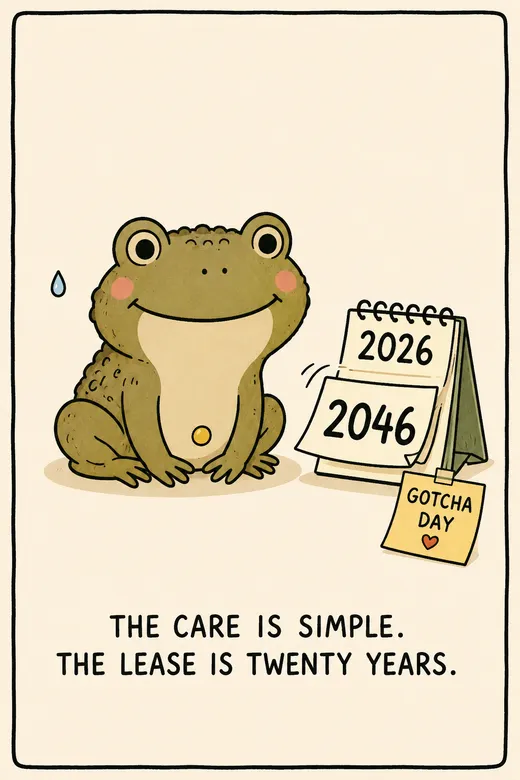
Simple care like a Pacman frog — but it gets huge and can live 15–25 years.
📋 At a glance
- Tank
- Large terrestrial ~36×18×18 in (1 frog only — cannibalistic)
- Temp
- 78–90°F day with a ~5°F night drop
- Humidity
- ~80–90% per an exotic-vet care sheet (keeper guides often run lower) — deep damp coco fibre to burrow in
- Food
- Dusted insects/roaches; adults every 3–4 days; rodents rarely
- Lifespan
- 15–25 years (documented to 45)
✅ The care is as simple as a Pacman frog — just know the size and lifespan you are signing up for.
🛒 Before you buy
- A big terrestrial tank (plan for the adult, not the froglet)
- Deep moist coco fibre (NEVER gravel) + a shallow soak dish
- LONG feeding tongs — the bite is genuinely powerful
- A thermometer + hygrometer and a secure, ventilated lid
A healthy one: Rounded but with some shape (not an obese dome) · clear eyes · smooth skin · a strong feeding response.
🚨 See a vet / act now if…
- Getting obese (pixies are prone to it — especially on frequent rodents)
- Swelling like a balloon all over (possible dropsy)
- A bloated belly with no droppings, or a mouth injury/infection
- A reddened belly or legs, or a soft jaw / bendy limbs
Cool them down, reduce stress, and contact an exotics vet — most issues are reversible if caught early.
⛔ Never
- Gravel substrate
- Frequent rodents (obesity)
- Fingers near the mouth (powerful bite)
🌿 Golden rules (all amphibians)
- Cycle the tank BEFORE the animal (ammonia = 0).
- Always dechlorinate tap water.
- Cool beats warm — most amphibians are cool/cold species.
- Look, don’t handle — their skin absorbs oils & soaps.
- Buy captive-bred, never wild-caught. Quarantine new arrivals.
- Never release a pet into the wild (it spreads disease).
- A real setup costs more than the animal — budget for it.
- When in doubt, ask — no shame in learning. 💚
