White's vs Red-Eyed Tree Frog: Which Should a Beginner Get?
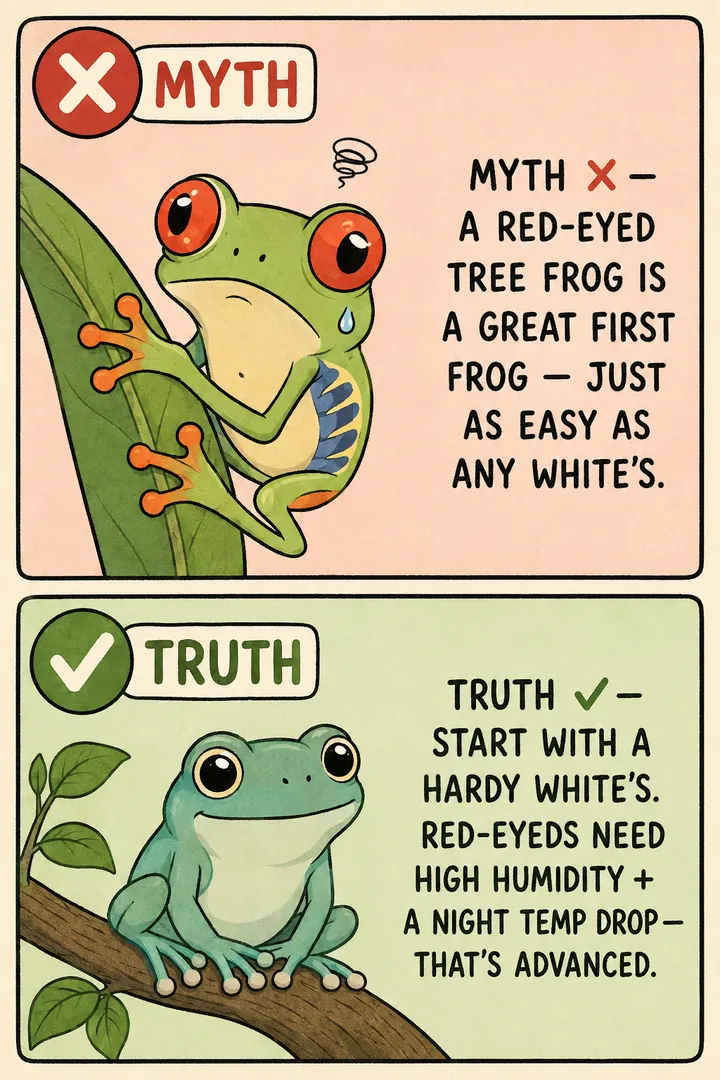
🔍 Fact check
“A red-eyed tree frog is a great first frog — just as easy as a White's.” — A common beginner assumption
Verdict: Mostly False
Both are beautiful, but they are very different to keep. A White's tree frog is hardy, calm and forgiving of beginner mistakes; a red-eyed tree frog needs steady high humidity (60–80%) with strong airflow, warmth that never tops 80°F, a slight night-time drop, and stable conditions, which makes it an advanced species. Starting with a red-eyed frog is where the animal pays for the learning curve.
The evidence:
- Red-eyed tree frogs need 60–80% humidity with strong airflow, and warmth that never tops 80°F (Chewy, vet-reviewed, and PetMD (Melissa Witherell, DVM) for the 80°F ceiling; Chicago Exotics Animal Hospital for the 60–80% humidity). They are nocturnal tree frogs of humid lowland forests (AmphibiaWeb — Agalychnis callidryas natural history), and their care demands more precision than a White's tree frog's forgiving 50–70% range and mistake tolerance.
- Mistake tolerance is the whole difference. A White's is hardy and calm; a red-eyed is shy and low-tolerance, so beginner errors that a White's shrugs off can be fatal to a red-eyed.
- The consensus first frog is the White's. Standard beginner guidance is to gain experience on a hardy species before keeping a red-eyed tree frog.
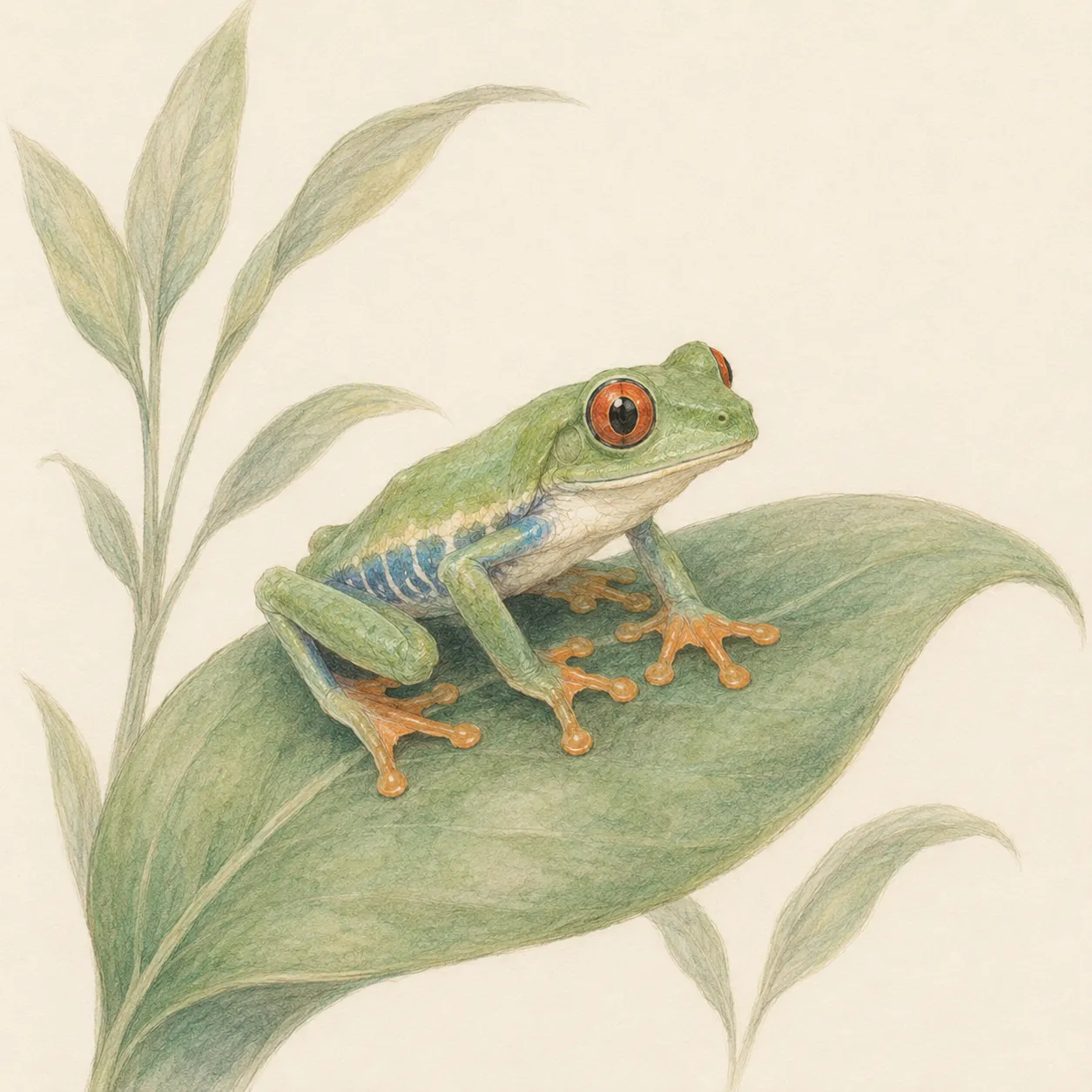
Both are gorgeous, but they’re very different frogs to keep. If you’re choosing your first tree frog, this comparison will save you a lot of grief.
🔧 Still deciding? Weigh the options side by side in the free species compare tool.
At a glance
| White’s tree frog 🟢 | Red-eyed tree frog 🔴 | |
|---|---|---|
| Beginner-friendly | Yes — the classic first frog | No — advanced |
| Humidity | 50–70% (forgiving) | 60–80%, with strong airflow (demanding) |
| Temperature | Room-ish, tolerant | 75–80°F, never above 80°F; slightly cooler nights |
| Temperament | Calm, chunky, bold | Shy, delicate, hides by day |
| Size | 3–4.5 in (sturdy) | 2–3 in (slender) |
| Mistake tolerance | High | Low |
| Lifespan | 10–16 yrs | ~5 yrs |
The verdict
Start with a White’s tree frog. It’s hardy, calm, tolerant of beginner mistakes, and genuinely charming — the “dumpy” smile is iconic. You can learn tree-frog keeping without the animal paying for every small error.
Save the red-eyed tree frog for later. They’re breathtaking, but they demand steady high humidity with strong airflow, warmth that never tops 80°F, a slight night-time drop, and stable conditions. Beginners who start here often struggle, and the frog is the one who suffers. Get a season or two of experience first.
What they share
Both are nocturnal, arboreal insectivores: tall planted vivarium with branches, gut-loaded calcium-dusted crickets, a shallow clean water dish, minimal handling, and low-level UVB. The difference is entirely in how forgiving they are.
One thing to never do
Don’t house them together (or with any other species). Different needs, disease risk, and stress — one species per enclosure, always.
💚 Falling for the red-eyed tree frog is completely understandable — they’re stunning. But starting with a White’s and working up isn’t settling; it’s the kindest path for both you and the frog.
Go deeper: the Tree Frog care sheet · tree frog questions answered.
Common questions
Which is easier to keep, a White's or red-eyed tree frog?
The White's tree frog is far easier and is the better beginner choice. It is hardy, tolerant of a range of conditions, calm, and forgiving of mistakes. Red-eyed tree frogs need steady high humidity with strong airflow, warmth that never tops 80°F, and stable conditions, which makes them an advanced species.
Are red-eyed tree frogs good for beginners?
Generally no. Red-eyed tree frogs are stunning but delicate, needing 60 to 80 percent humidity with strong airflow, steady warmth that never tops 80°F, and careful husbandry. They are best kept once you have experience, ideally after a hardier species like a White's tree frog.
Do White's and red-eyed tree frogs need different care?
Yes. White's tree frogs do well around 50 to 70 percent humidity and are heat- and mistake-tolerant, while red-eyed tree frogs need 60 to 80 percent humidity with strong airflow, warmth that never tops 80°F, and more precise conditions. Both are nocturnal, arboreal insectivores kept in tall planted vivariums.
Can White's and red-eyed tree frogs live together?
No. Do not mix tree frog species. They have different care needs, can transmit diseases to one another, and cohousing different species causes stress. Keep one species per enclosure.
How big do White's and red-eyed tree frogs get?
White's tree frogs are chunky and reach about 3 to 4.5 inches, while red-eyed tree frogs are more slender and reach about 2 to 3 inches. White's are the heavier, sturdier-looking of the two.

Join the Bognook burrow
Cozy amphibian care tips, aesthetic freebies, and the occasional frog fact — straight to your inbox. No spam, just good bog vibes.
Free amphibian care cheat-sheet when you join. No spam — pinky-promise. Unsubscribe anytime. See how we handle your data in our privacy notice.